Did you know…
How much gravity in outer space?
Short answer
Gravity is everywhere and never falls to zero; it only weakens with distance, following an inverse-square law. Surface gravity is 9.80 m/s² on Earth, 1.62 m/s² on the Moon and 3.71 m/s² on Mars. In low Earth orbit it is only modestly weaker than at sea level: crews float because they are falling, not because gravity has gone.
An inverse-square law, not a switch
Gravity weakens with distance but never switches off. Double the distance from a body's centre and its pull drops to a quarter; move a thousand times further and it becomes a millionth, yet it remains. That is why the Moon stays with Earth, Earth with the Sun and the Sun with the Galaxy across distances that dwarf any spacecraft's journey. There is no boundary where gravity stops, and the phrase zero gravity has no physical meaning: even in the emptiest volume between galaxies, a test mass still feels the pull of everything around it.
Numbers you can stand on
When gravity is quoted as a single figure, it is usually surface gravity. On Earth it is 9.80 m/s², the speed an unimpeded object gains for each second of fall. On the Moon it is 1.62 m/s², about a sixth of Earth's, which is why the Apollo crews bounced rather than walked. On Mars it is 3.71 m/s², a little over a third. The same body weighs different amounts in each place while its mass never changes: weight is a force, mass is an amount of matter.
Why orbit feels empty
Low Earth orbit is not a low-gravity zone. A station a few hundred kilometres up is still well inside Earth's field, and the pull there is only modestly weaker than at sea level. Crews float because they and their vehicle fall together, so nothing presses them against a floor. Genuinely low gravity is found on the surfaces of small bodies: on an asteroid a few kilometres across, a careless jump can exceed escape velocity. The distinction is an engineering one as much as a physical one — a spacecraft in orbit is firmly held by gravity, a body on a tiny asteroid is barely held at all.
More questions
- Image pending
Astronauts and life in space
Why does astronauts float in space?
Because they are in free fall, not because gravity is absent. At the International Space Station's altitude of about 400 km, Earth still pulls almost as hard… more…
- Image pending
Astronauts and life in space
Why did yuri gagarin die?
Gagarin died in an aircraft crash, not in a spacecraft. On 27 March 1968 the MiG-15UTI trainer he was flying with instructor Vladimir Seryogin went down in… more…
- Image pending
Astronauts and life in space
How much an astronaut is paid?
NASA's civilian astronauts are ordinary federal employees, paid on the General Schedule grade-and-step scale with no bonus per flight, per spacewalk or per… more…
.png)
Astronauts and life in space
Why is blue origin so slow?
Blue Origin was built on deliberate, owner-funded incrementalism: its motto is Gradatim Ferociter, step by step, and it spent its first two decades on… more…
Astronauts and life in space
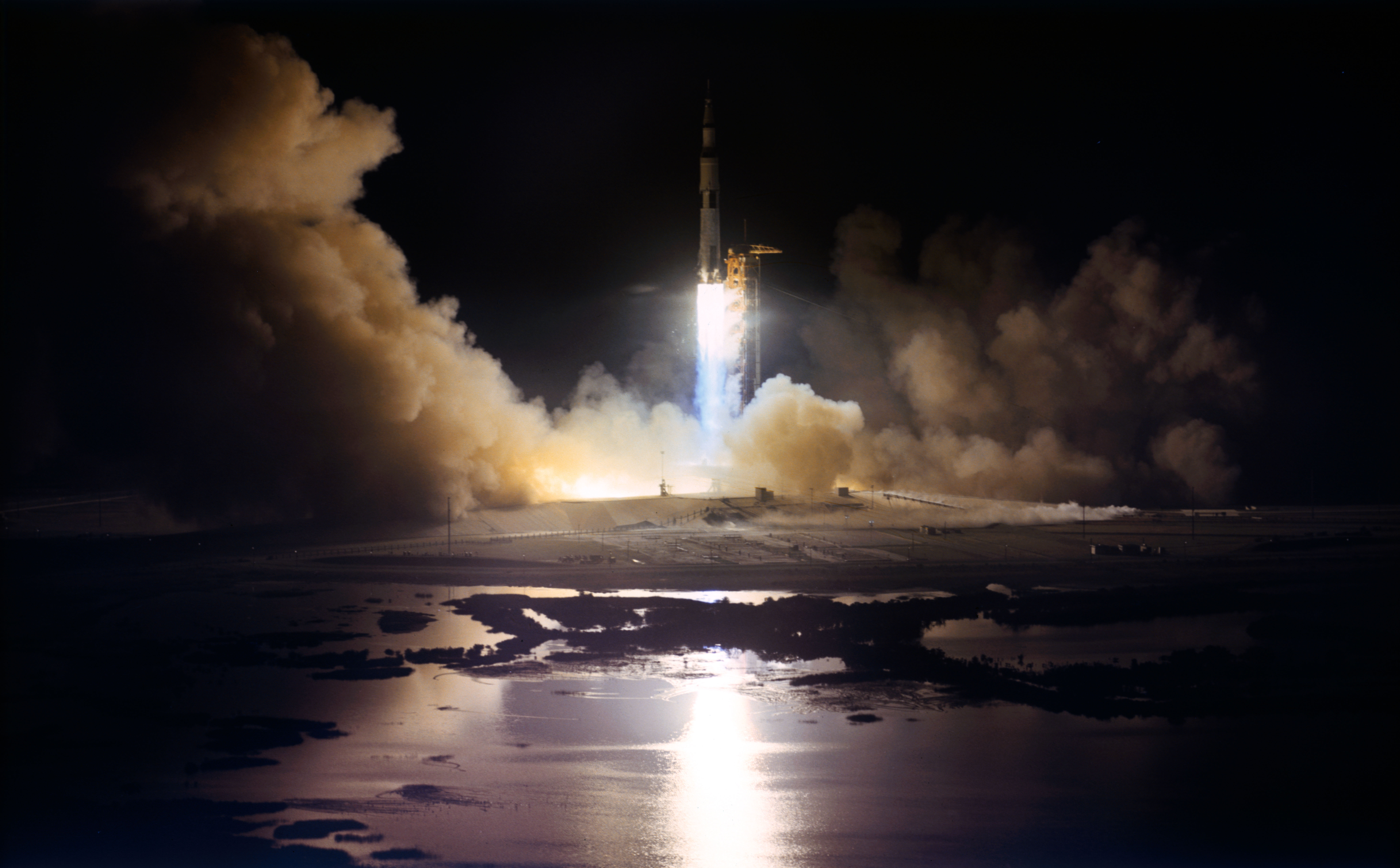
When did astronauts last walk on the moon?
Apollo 17, in December 1972. Eugene Cernan and Harrison Schmitt landed in the Taurus-Littrow valley on 11 December 1972, worked on the surface for three days… more…
- Image pending
Astronauts and life in space
How high do astronauts orbit the earth?
Crewed spaceflight today happens a few hundred kilometres up. The International Space Station orbits at about 400 km, lapping the planet roughly every 90… more…
