Did you know…
How much does it cost to land at an airport?
Short answer
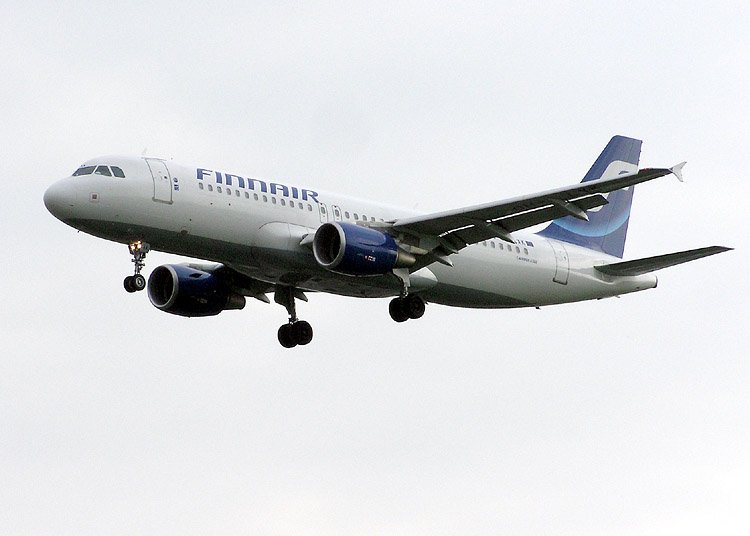
Landing costs range from 10-30 euros for a light aircraft at a small airfield to several thousand euros for an airliner at a major airport. The landing fee is calculated per tonne of maximum takeoff weight, plus charges for passengers, parking, security and noise; a full A320 at London Heathrow runs over £5,000 (as of 2025).
How the landing fee is calculated
The landing fee itself is charged per tonne of the aircraft's maximum takeoff weight (MTOW), on a sliding scale: an ultralight pays a few euros and a 350-tonne Boeing 777, several thousand. At congested airports like Heathrow or Frankfurt, surcharges also apply for peak time slots and noise category, so an older, noisier aircraft pays more than an A320neo. At general aviation airfields it's usually a flat rate, between 10 and 30 euros for a two-tonne light aircraft, sometimes waived if fuel is purchased.
What really adds up: the passenger
For airlines, the landing fee is only part of the bill. The bulk of the charges are per boarded passenger: terminal usage fee, security, assistance for passengers with reduced mobility, and in many countries, a state tax. At Heathrow the per-passenger charge is around £25 (as of 2025), the highest in Europe; across Aena's network it sits around 10-15 euros depending on the airport and destination. An A320 with 180 passengers landing at London Heathrow thus generates more than £5,000 in charges before counting parking, the boarding bridge, ground power supply and the air navigation charges Eurocontrol levies for the route.
Public, regulated tariffs
All these charges are public: every airport publishes an annual tariff guide, and in Europe the Airport Charges Directive requires them to be discussed with airlines and justified by costs. In Spain they are set by Aena under supervision from the CNMC; in the UK, the CAA regulates Heathrow's charges. Low-cost airlines negotiate volume discounts or incentives for opening new routes at secondary airports, which sometimes charge almost nothing to land in order to capture traffic, then make money on parking and retail instead.
More questions

Foto: 4300streetcar (CC BY 4.0) Commercial aviation
Which 747 carried Enterprise "piggyback"?
The first Shuttle Carrier Aircraft was a Boeing 747-123 registered N905NA, originally built for American Airlines and acquired by NASA in 1974. Boeing… more…

Commercial aviation
Was there an amphibious DC-3?
Yes: the Douglas XC-47C was created by fitting Edo Model 78 floats onto a standard C-47. The single-step metal floats carried retractable wheels that also… more…

OTFW, Berlin (CC BY SA), vía commons Commercial aviation
Was a C-47 converted into a glider?
Yes: the Douglas XCG-17 was an assault glider created by converting a twin-engine C-47 Skytrain during World War II. Its engines were removed and the nacelles… more…
Commercial aviation
What did the USSR build from the DC-3?
The USSR built a version of the DC-3 under a licence granted to its government on 15 July 1936. It was designated PS-84 and, in 1942, renamed Lisunov Li-2… more…
Commercial aviation
What was "Puff, the Magic Dragon"?
It was the nickname of the Douglas AC-47 Spooky, the first in a series of fixed-wing gunships developed by the United States Air Force during the Vietnam War… more…
Commercial aviation
How did the RAF refer to the C-47?
The RAF called it Dakota: the Dakota I was the designation for 53 C-47s received under Lend-Lease. The Dakota III designated 962 C-47A Skytrains. The Dakota… more…


