Did you know…
How long was the space race?
Short answer
The Space Race is conventionally dated from the Soviet launch of Sputnik 1 on 4 October 1957 to the Apollo-Soyuz Test Project docking of July 1975, about eighteen years. Many accounts close it earlier, with the Apollo 11 landing on 20 July 1969, which makes the contest roughly twelve years long.
Two defensible endings
The opening date is uncontested. On 4 October 1957 the Soviet Union placed Sputnik 1 in orbit, a polished 83.6 kg sphere whose radio beeps were audible to amateur receivers worldwide and whose political effect in Washington was immediate. The United States answered with Explorer 1 on 31 January 1958 and created NASA that October.
The closing date is where historians diverge. One reading ends the race on 20 July 1969, when Apollo 11 landed and the goal President Kennedy had set in May 1961 was met — a span of just under twelve years. The other continues to 17 July 1975, when an Apollo command module docked with a Soyuz in orbit and the two crews shook hands, the first joint American-Soviet flight and a deliberate symbol of détente. That reading gives close to eighteen years.
The milestones in between
The pace was extraordinary. Laika flew in November 1957; Luna 2 struck the Moon in September 1959; Yuri Gagarin became the first human in orbit on 12 April 1961, followed by Alan Shepard's suborbital flight three weeks later. Valentina Tereshkova flew in June 1963, Alexei Leonov performed the first spacewalk in March 1965, and Gemini matured rendezvous and docking. The Soviets led almost every early first; the United States led the one that closed the contest.
Why it stopped
The race ended because its logic did. The Soviet N1 heavy launcher failed on all four test flights and its lunar programme was abandoned. Apollo funding, which had absorbed an enormous share of the federal budget, was cut, and the final three landings were cancelled. What followed was cooperation in orbit, not competition.
More questions
- Image pending
Astronauts and life in space
Why does astronauts float in space?
Because they are in free fall, not because gravity is absent. At the International Space Station's altitude of about 400 km, Earth still pulls almost as hard… more…
- Image pending
Astronauts and life in space
Why did yuri gagarin die?
Gagarin died in an aircraft crash, not in a spacecraft. On 27 March 1968 the MiG-15UTI trainer he was flying with instructor Vladimir Seryogin went down in… more…
- Image pending
Astronauts and life in space
How much an astronaut is paid?
NASA's civilian astronauts are ordinary federal employees, paid on the General Schedule grade-and-step scale with no bonus per flight, per spacewalk or per… more…
.png)
Astronauts and life in space
Why is blue origin so slow?
Blue Origin was built on deliberate, owner-funded incrementalism: its motto is Gradatim Ferociter, step by step, and it spent its first two decades on… more…
Astronauts and life in space
When did astronauts last walk on the moon?
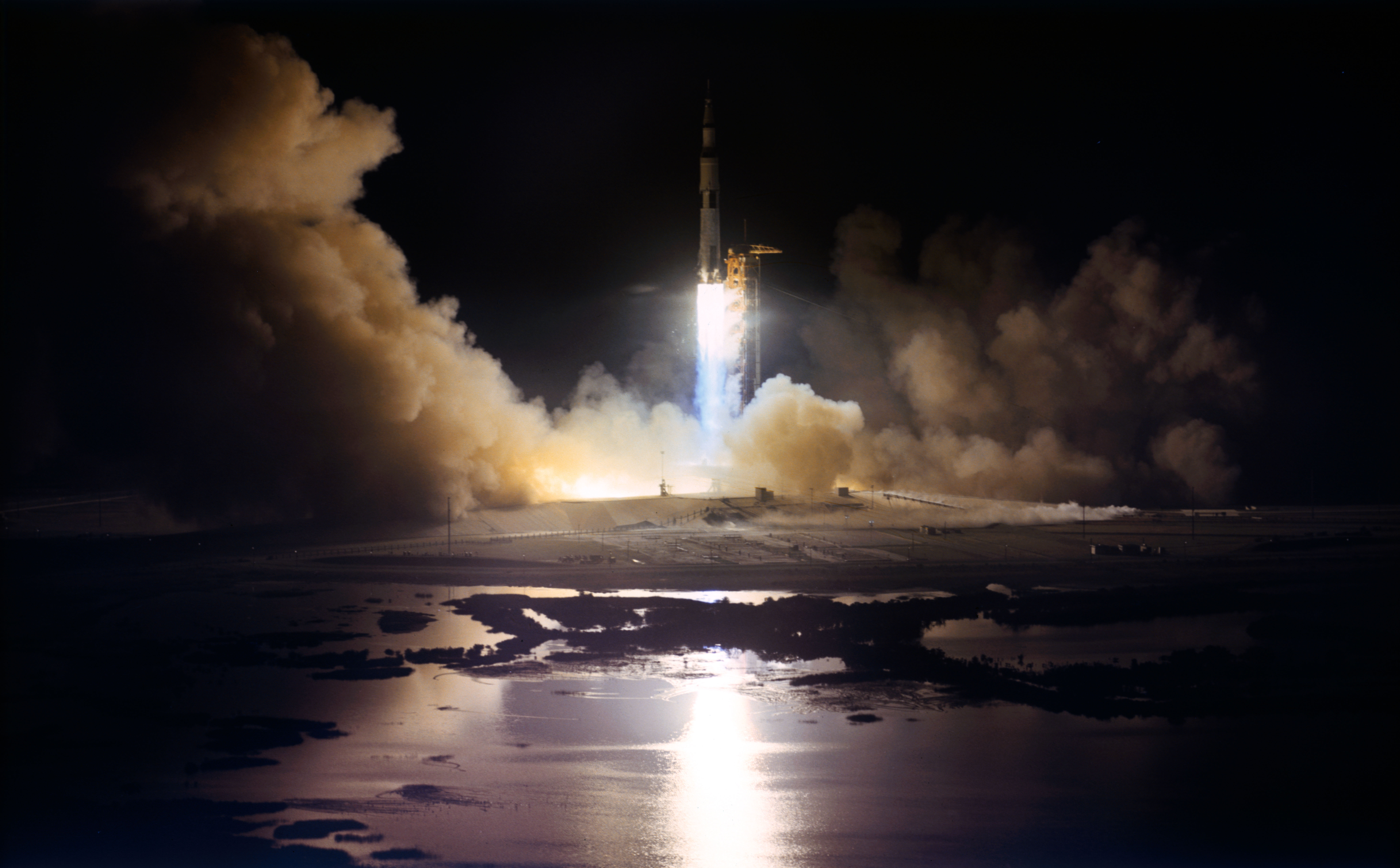
Apollo 17, in December 1972. Eugene Cernan and Harrison Schmitt landed in the Taurus-Littrow valley on 11 December 1972, worked on the surface for three days… more…
- Image pending
Astronauts and life in space
How high do astronauts orbit the earth?
Crewed spaceflight today happens a few hundred kilometres up. The International Space Station orbits at about 400 km, lapping the planet roughly every 90… more…
