Did you know…
How long starship to moon?
Short answer
Starship is not the vehicle that carries a crew from Earth to the Moon. Under NASA's Artemis plan it flies uncrewed to lunar orbit after refuelling in Earth orbit, and waits there; the astronauts travel separately aboard Orion. For comparison, Apollo 11 took just over four days from lift-off to touchdown.
.png)
Starship is the lander, not the ferry
Under the Artemis architecture NASA has contracted, the crew leaves Earth aboard Orion and meets a lander already parked in lunar orbit. The Starship Human Landing System gets there on its own, uncrewed, and its journey has two parts with no equivalent in Apollo. First it reaches low Earth orbit nearly empty of propellant and is refilled by a series of tanker flights, a campaign whose length depends on how fast those tankers can be launched. Only then does it head for the Moon, and because nobody is aboard it can take a slow, propellant-efficient trajectory instead of a fast one.
What sets the clock
For a crewed crossing the schedule is set by people: consumables, radiation exposure and the need to keep return options open. Apollo 11 took just over four days from lift-off on 16 July 1969 to touchdown on 20 July, and the physics has not changed since. For an uncrewed vehicle the schedule is set by propellant instead. Low-energy transfers that loop far out before falling into lunar orbit cut the braking cost substantially, at the price of weeks rather than days in transit, and a lander that must arrive with full tanks has every reason to accept them.
The part still being proven
None of this is routine yet. Propellant transfer in orbit at the scale Starship needs has never been demonstrated between two full-size vehicles, and the number of tanker flights required drives the timeline far more than any coasting time does. That is why schedule questions about Starship and the Moon are answered in launch campaigns rather than in travel time: the transfer itself is a solved problem, the refuelling is not. A crewed Starship flying directly from Earth to the lunar surface is not part of the current plan.
More questions
- Image pending
Astronauts and life in space
Why does astronauts float in space?
Because they are in free fall, not because gravity is absent. At the International Space Station's altitude of about 400 km, Earth still pulls almost as hard… more…
- Image pending
Astronauts and life in space
Why did yuri gagarin die?
Gagarin died in an aircraft crash, not in a spacecraft. On 27 March 1968 the MiG-15UTI trainer he was flying with instructor Vladimir Seryogin went down in… more…
- Image pending
Astronauts and life in space
How much an astronaut is paid?
NASA's civilian astronauts are ordinary federal employees, paid on the General Schedule grade-and-step scale with no bonus per flight, per spacewalk or per… more…
.png)
Astronauts and life in space
Why is blue origin so slow?
Blue Origin was built on deliberate, owner-funded incrementalism: its motto is Gradatim Ferociter, step by step, and it spent its first two decades on… more…
Astronauts and life in space
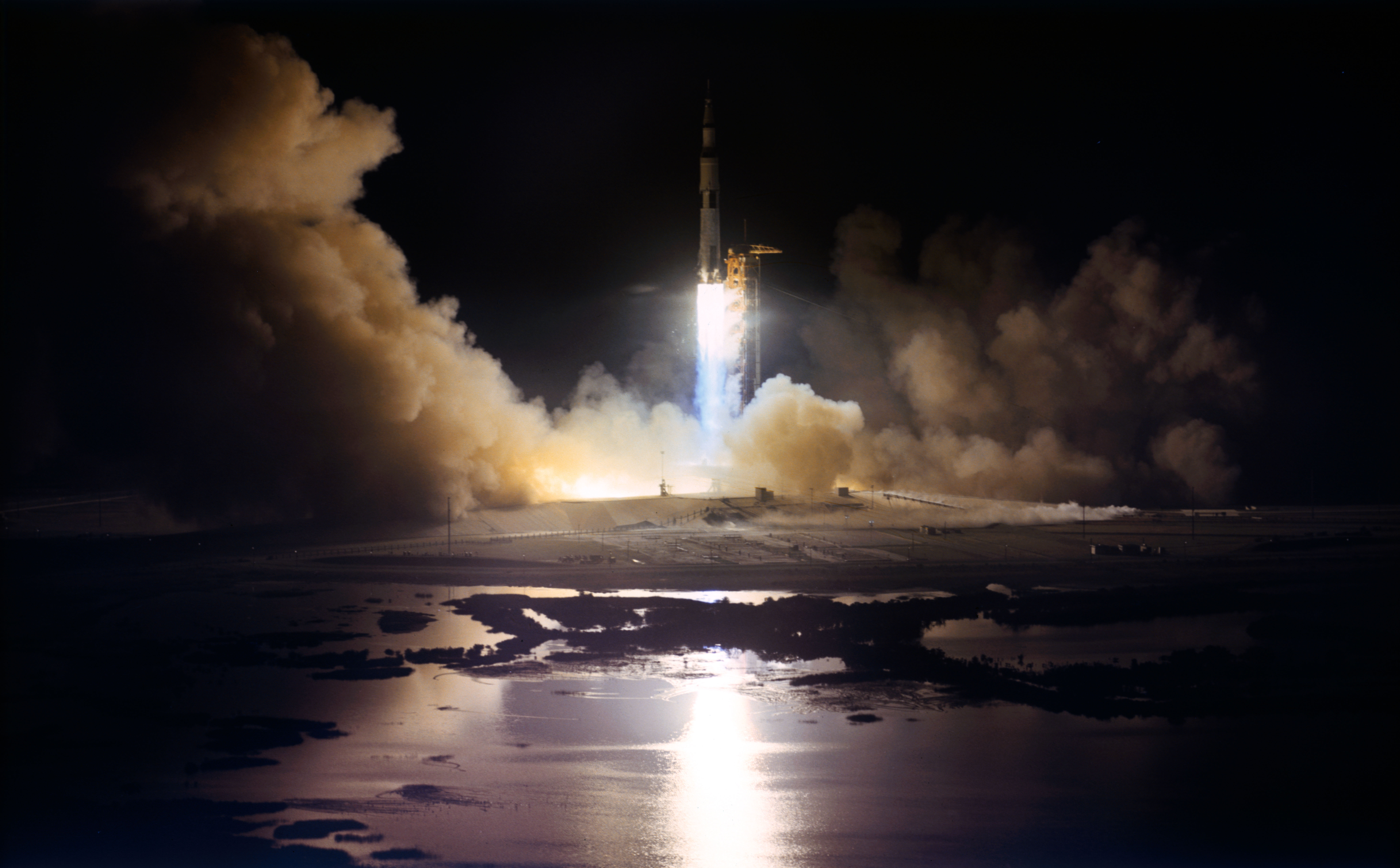
When did astronauts last walk on the moon?
Apollo 17, in December 1972. Eugene Cernan and Harrison Schmitt landed in the Taurus-Littrow valley on 11 December 1972, worked on the surface for three days… more…
- Image pending
Astronauts and life in space
How high do astronauts orbit the earth?
Crewed spaceflight today happens a few hundred kilometres up. The International Space Station orbits at about 400 km, lapping the planet roughly every 90… more…
