Did you know…
How long does it take an astronaut to get to Mars?
Short answer
About seven months for the outbound leg on the most recent trip: launched on July 30, 2020, the Perseverance rover landed on Mars on February 18, 2021. A crewed mission would follow the same mechanics, then have to wait on site for a return window: the expedition would then be counted in years, not months.
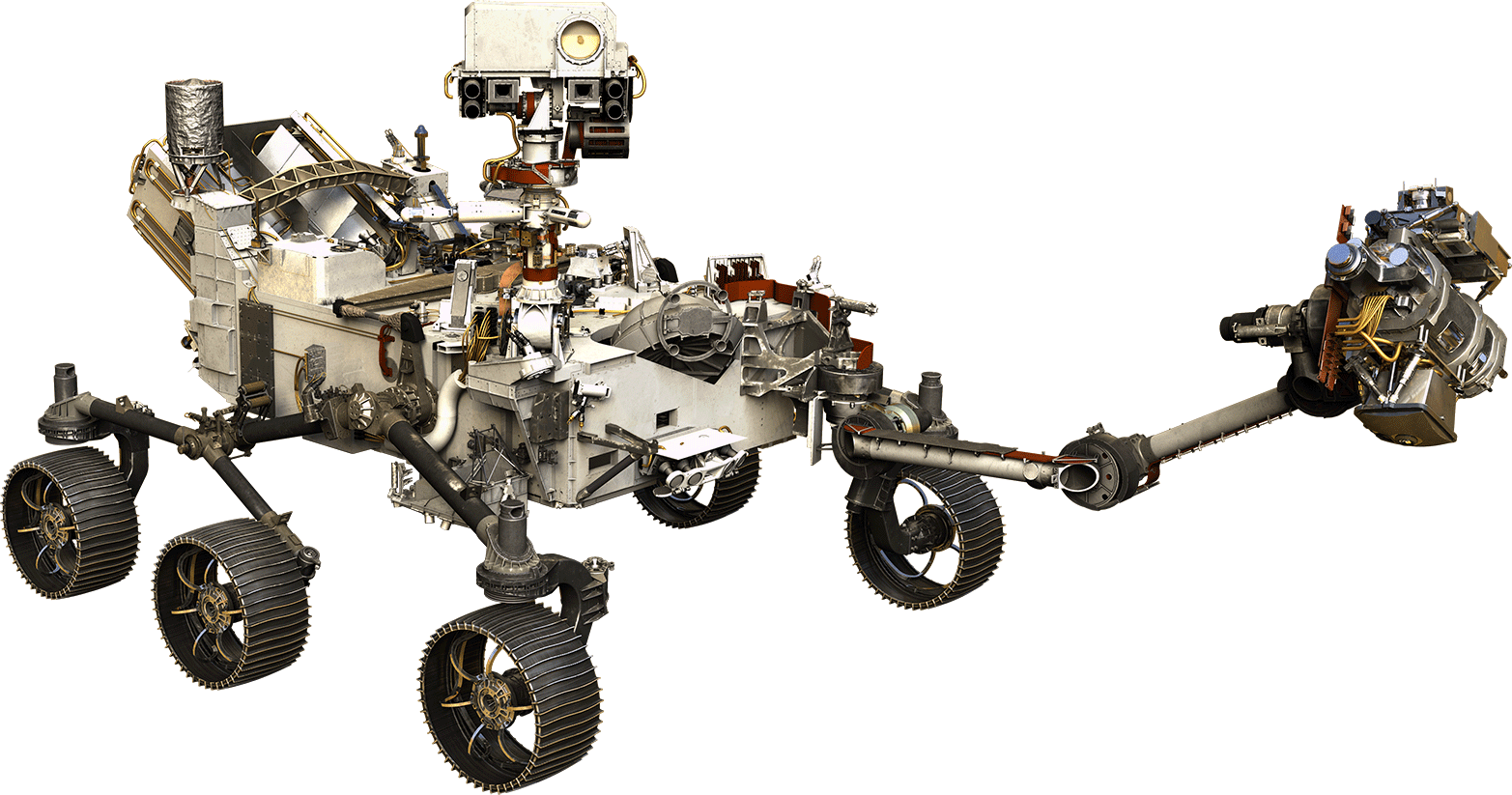
Seven months for the most recent trip
The journey happens in free fall: you leave Earth on a trajectory that intersects Mars's orbit, then let celestial mechanics do the work. The Perseverance rover launched on July 30, 2020, and landed in Jezero crater on February 18, 2021, after a seven-month cruise. A crewed mission would follow the same principle: the duration of the trip depends on the launch window and the amount of propellant one is willing to spend, not on engine power during the crossing.
Windows every two years
Earth and Mars are not always well positioned: departures are only possible for a few weeks, and the opportunity returns only about every two years. That's why probes leave in waves, with several agencies taking advantage of the same window. For a crew, the constraint is far heavier: once there, they would have to wait for the configuration favorable to the return to arise. Depending on the chosen profile, this means either a short stay on Mars at the cost of a faster, more expensive trip, or a long stay on the ground with economical trips.
What the duration does to bodies
The schedule isn't just a matter of planning: outside Earth's magnetic field, the crew absorbs continuous cosmic radiation, with the possibility of a solar flare along the way. Added to this are bone and muscle loss, the effects of weightlessness on vision, isolation, and a communications delay that rules out any real-time dialogue with the ground. It is this accumulation, more than the distance, that makes the trip duration the critical parameter: every week saved reduces the dose received and the amount of supplies to carry.
More questions

Lviatour (CC BY SA), vía commons Astronauts and life in space
What did Neil Armstrong see in the Cueva de los Tayos?
An enormous cave full of life, not an extraterrestrial structure. According to an account by a caver on the team, published in 1979, Armstrong was the guest… more…

Astronauts and life in space
Why do astronauts grow taller in space?
In microgravity, the spine is no longer compressed by body weight: it lengthens and the back's natural curves flatten out. The crew gains a few centimeters… more…

Astronauts and life in space
How do astronauts sleep in space?
Each astronaut on the International Space Station has an individual cabin about the size of a phone booth, with a sleeping bag strapped to the floor, ceiling… more…
Astronauts and life in space
How long do astronauts sleep?
The International Space Station's schedule reserves 8.5 hours of sleep per night for each crew member. In practice, they sleep less: a study published in 2014… more…

Astronauts and life in space
How do astronauts eat in space?
Meals on board are mostly dehydrated foods rehydrated with water from a dispenser, and ready-to-eat thermostabilized dishes warmed in the galley oven, along… more…

Astronauts and life in space
How much money does Alexander Gerst have?
There is no reliable figure for Alexander Gerst's fortune; the amounts on celebrity websites are estimates without basis. What is documented is his… more…


