Did you know…
How long does Artemis 2 take to reach the Moon?
Short answer
Five days from liftoff: Artemis II launched on April 1, 2026, and passed its closest point to the Moon on April 6, flight day six. The outbound leg after trans-lunar injection took about four days; Orion never entered lunar orbit, and the full mission lasted 9 days, 1 hour and 32 minutes.

Five days to the Moon, four of cruising
Artemis II didn't shoot straight for the Moon right after liftoff. Orion first went through a systems checkout phase in Earth orbit, with the crew aboard verifying the spacecraft, and only afterward did the service module's engine perform the trans-lunar injection burn. According to NASA, that burn set it on an outbound trip of roughly four days toward the far side of the Moon. Over the following three days, three small correction burns using the orbital maneuvering system were carried out, the usual way of fine-tuning a long trajectory without burning extra propellant. The spacecraft entered the Moon's gravitational sphere of influence at 00:37 EDT on April 6, at the end of mission day five, and reached its closest approach that same day, flight day six: five days after the April 1 liftoff.
A distant flyby, not a landing
The shape the spacecraft traced was a figure eight that extended more than 230,000 miles from Earth. The plan called for passing between 4,000 and 6,000 miles above the lunar surface depending on the launch date, far farther than the 80 miles Artemis I flew; on the actual flight, the closest approach came in at 4,067 miles. No one landed or entered lunar orbit: the Moon's gravity curved the trajectory and sent Orion back home, a geometry designed so the return trip is guaranteed even if propulsion fails.
What the clock showed
Liftoff took place on April 1, 2026, from Kennedy Space Center, and splashdown came on April 10 off the coast of San Diego, for a total mission duration of 9 days, 1 hour and 32 minutes. During that time the crew traveled 695,081 miles and reached a maximum distance of 252,756 miles from Earth, surpassing the distance record Apollo 13's astronauts had held since 1970. Asking "how long does it take to get there" therefore has several answers: about four days of cruising after trans-lunar injection, five days from liftoff to flyby, and just over nine for the full round trip.
More questions
Moon and Mars
How does neil armstrong look like?
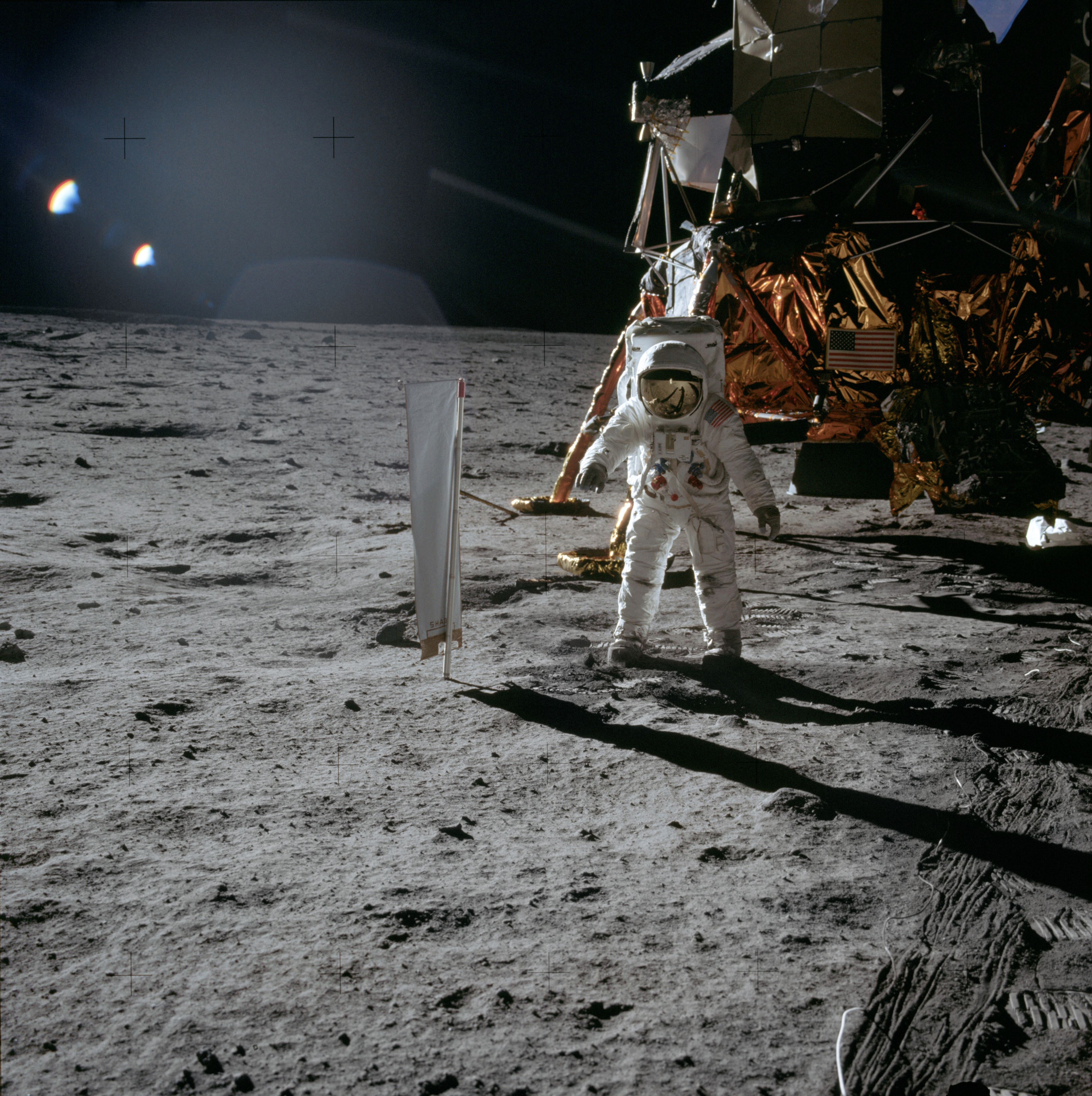
The face most people picture is not his: the gold-visored astronaut in the famous Apollo 11 photograph is Buzz Aldrin, shot by Armstrong. Armstrong himself is… more…

Richard Dorrell (CC BY SA), vía commons Moon and Mars
How does the moon affect the tides?
By pulling unevenly on it. Tidal forces vary inversely as the cube of the distance, so the near side of the Earth is tugged harder than the far side: one… more…
Moon and Mars
Why does neil armstrong have a hollywood star?
Strictly he does not have a star. Armstrong, Aldrin and Collins share four circular monuments resembling the Moon, one at each corner of Hollywood and Vine… more…
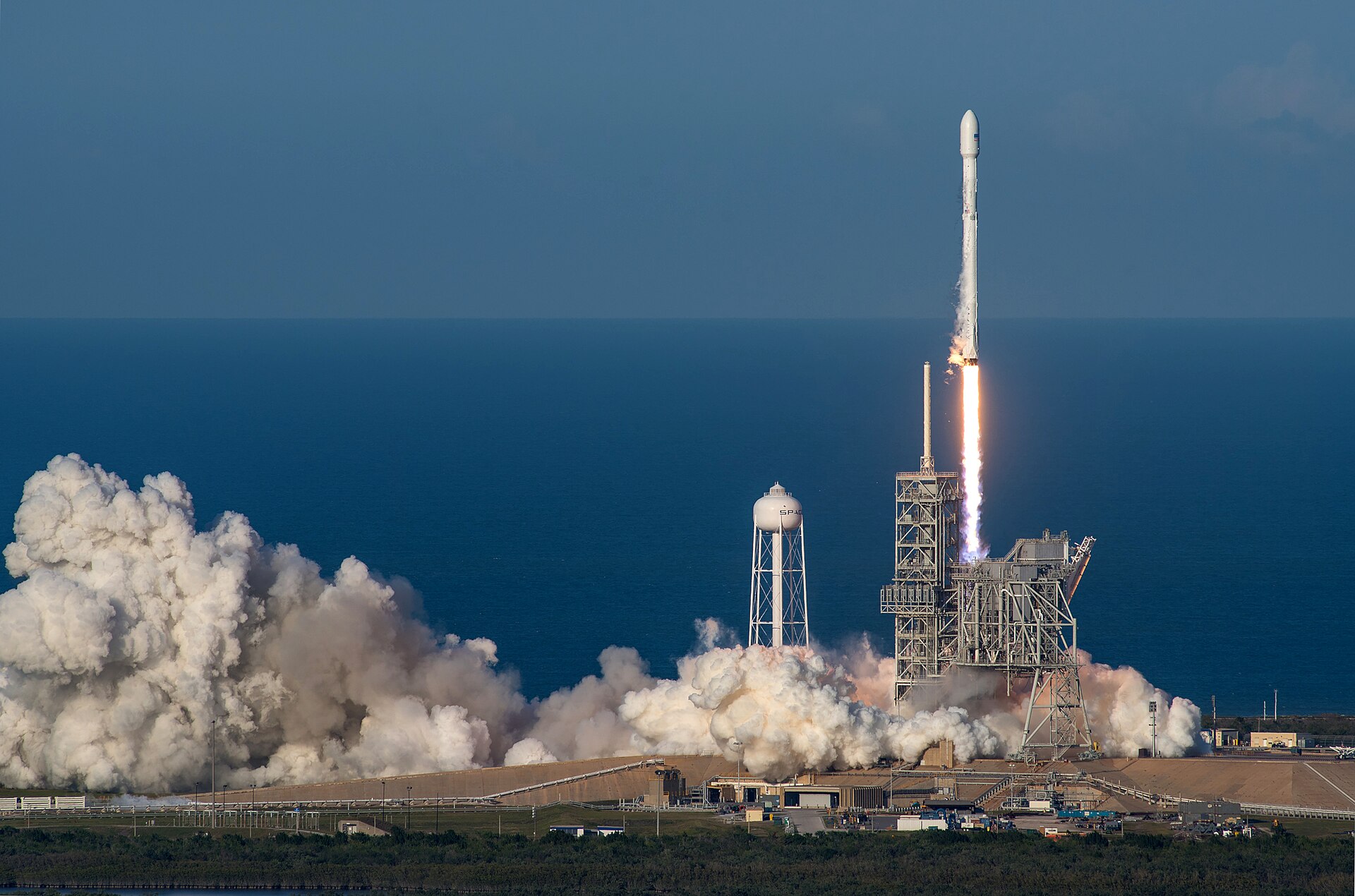
Foto: SpaceX (CC0) Moon and Mars
Why did falcon 9 hit the moon?
Because a spent upper stage on a lunar trajectory has no mission and no way to steer. A Falcon 9 upper stage from the January 2025 Firefly Blue Ghost 1 launch… more…
Moon and Mars
How much apollo 11 cost?
NASA never published a price for Apollo 11 on its own; what is documented is the program. The United States spent $25.8 billion on Project Apollo between 1960… more…
Moon and Mars
How much time neil armstrong spent on moon?
Armstrong and Aldrin spent 21 hours, 36 minutes on the Moon's surface, almost all of it inside the lunar module Eagle. Armstrong stepped onto the surface… more…

