Did you know…
How long did yuri gagarin stay in space?
Short answer
One orbit and 108 minutes. Vostok 1 lifted off from Baikonur on 12 April 1961 and Yuri Gagarin was back on the ground near Engels, in the Saratov region, one hour and 48 minutes later. He ejected at about 7 km (23,000 ft) and came down under his own parachute, apart from the capsule. He never flew in space again.

One lap, by design
Vostok 1 lifted off from the Baikonur Cosmodrome on 12 April 1961 with a single orbit on the flight plan. Nobody knew how a human body would cope with prolonged weightlessness, and the spacecraft had no propulsion system trustworthy enough to justify staying longer, so the profile was deliberately minimal: climb, one circuit of the planet with a peak altitude of about 327 km, then retrofire. Total time from launch to landing was 108 minutes. Gagarin's manual controls were locked, with the unlocking code sealed in an envelope, because engineers were unsure whether weightlessness would impair his judgement.
The landing that was kept quiet
The descent module came down near Engels, in the Saratov region, but Gagarin was no longer inside it. He ejected at roughly 7 km (23,000 ft) and parachuted separately, landing in a field where a farmer and her daughter met a stranger in an orange suit. Soviet officials did not disclose the ejection for years: the sporting code then in force required a pilot to land inside the craft for a record to be homologated. The capsule itself touched down nearby under its own canopy, scorched by re-entry.
What 108 minutes settled
Brief as it was, the flight answered the open questions. A person could eat, drink, speak and observe in orbit, and could return without lasting harm. Within four months Gherman Titov flew Vostok 2 for 17 orbits, and the argument shifted from whether humans could survive spaceflight to how long they could usefully work there. Gagarin became a global figure and was kept away from further flights as too valuable to risk; he died in 1968 when the MiG-15UTI he was flying crashed. That single orbit remains the whole of his time in space.
More questions
- Image pending
Astronauts and life in space
Why does astronauts float in space?
Because they are in free fall, not because gravity is absent. At the International Space Station's altitude of about 400 km, Earth still pulls almost as hard… more…
- Image pending
Astronauts and life in space
Why did yuri gagarin die?
Gagarin died in an aircraft crash, not in a spacecraft. On 27 March 1968 the MiG-15UTI trainer he was flying with instructor Vladimir Seryogin went down in… more…
- Image pending
Astronauts and life in space
How much an astronaut is paid?
NASA's civilian astronauts are ordinary federal employees, paid on the General Schedule grade-and-step scale with no bonus per flight, per spacewalk or per… more…
.png)
Astronauts and life in space
Why is blue origin so slow?
Blue Origin was built on deliberate, owner-funded incrementalism: its motto is Gradatim Ferociter, step by step, and it spent its first two decades on… more…
Astronauts and life in space
When did astronauts last walk on the moon?
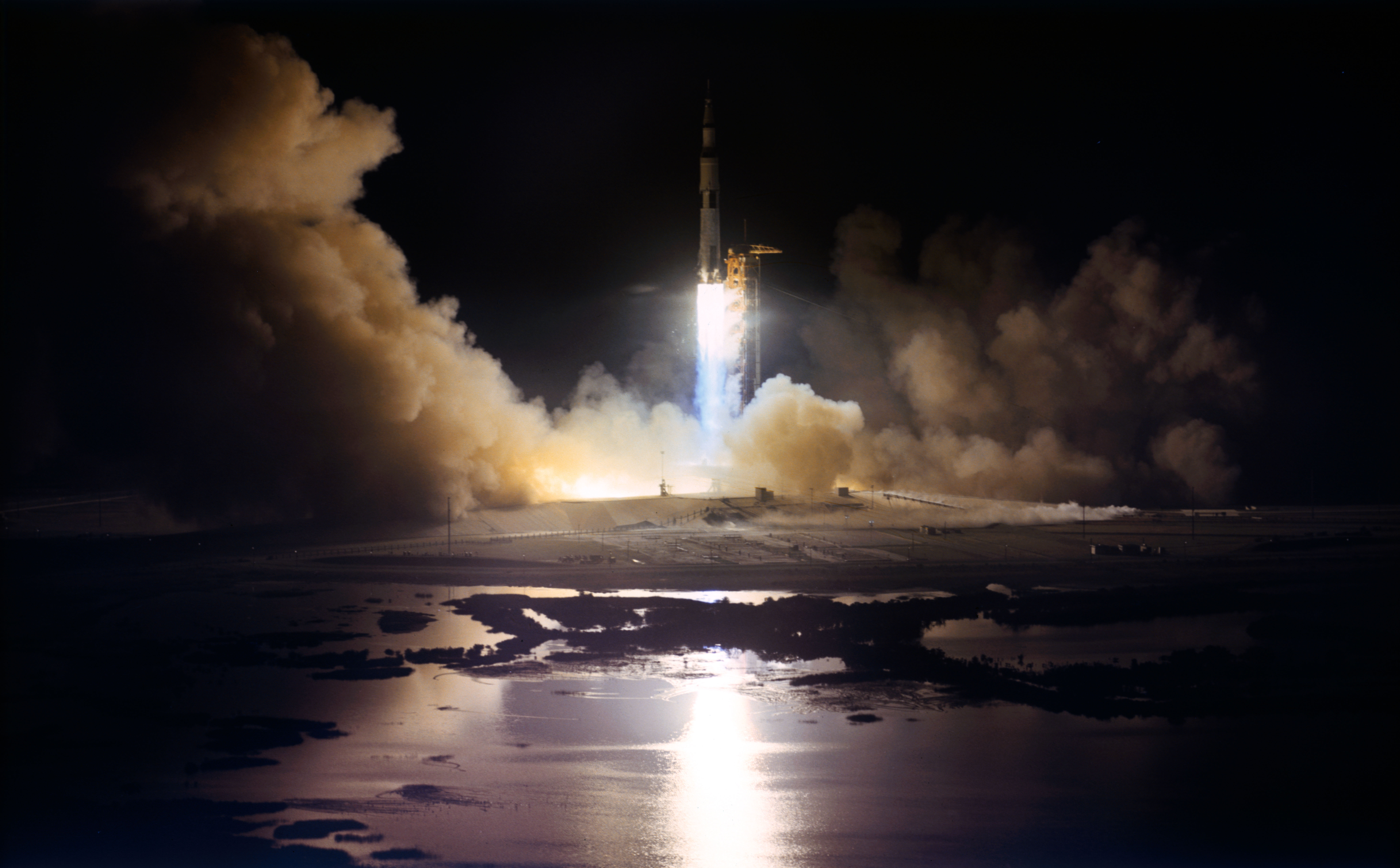
Apollo 17, in December 1972. Eugene Cernan and Harrison Schmitt landed in the Taurus-Littrow valley on 11 December 1972, worked on the surface for three days… more…
- Image pending
Astronauts and life in space
How high do astronauts orbit the earth?
Crewed spaceflight today happens a few hundred kilometres up. The International Space Station orbits at about 400 km, lapping the planet roughly every 90… more…
