Did you know…
How long astronauts stay in space station?
Short answer
A standard International Space Station expedition lasts about six months. Crews launch on Soyuz or Crew Dragon, hand over to their replacements and come home after roughly 180 days. Some stays are deliberately extended for research or shortened by scheduling, and a handful of astronauts have spent close to a year aboard in a single flight.
Six months as the working standard
The International Space Station runs on expeditions, numbered sequentially, and the usual increment for a crew member is around six months. The figure is not arbitrary. It balances the cost and availability of crew vehicles, the certified orbital lifetime of the spacecraft left docked as a lifeboat, and the amount of physiological change a body can absorb before recovery on the ground becomes difficult.
Crews overlap rather than swapping cleanly. An arriving vehicle brings replacements who spend days handing over experiments, maintenance tasks and the unwritten knowledge of where everything is stowed, before the departing crew undocks. That overlap is why the station's population fluctuates between roughly seven and eleven people at a time.
Longer and shorter stays
Deliberate exceptions exist for research. NASA and Roscosmos have flown one-year missions to study how the body responds to extended exposure, and the resulting medical data feed directly into planning for journeys to Mars, where a round trip cannot be cut short. Individual stays have also stretched beyond plan for operational reasons, including vehicle problems that delayed a return.
Short visits are a separate category. Private astronaut missions and visiting crews typically spend one to two weeks docked, working a compressed schedule of experiments and outreach before undocking.
What six months does to a body
The duration drives the entire onboard health regime. Bone density and muscle mass decline without the constant load of gravity, fluids shift towards the head and vision can be affected, so crews spend around two hours a day on resistance and cardiovascular exercise. Rehabilitation continues for weeks after landing.
More questions
- Image pending
Astronauts and life in space
Why does astronauts float in space?
Because they are in free fall, not because gravity is absent. At the International Space Station's altitude of about 400 km, Earth still pulls almost as hard… more…
- Image pending
Astronauts and life in space
Why did yuri gagarin die?
Gagarin died in an aircraft crash, not in a spacecraft. On 27 March 1968 the MiG-15UTI trainer he was flying with instructor Vladimir Seryogin went down in… more…
- Image pending
Astronauts and life in space
How much an astronaut is paid?
NASA's civilian astronauts are ordinary federal employees, paid on the General Schedule grade-and-step scale with no bonus per flight, per spacewalk or per… more…
.png)
Astronauts and life in space
Why is blue origin so slow?
Blue Origin was built on deliberate, owner-funded incrementalism: its motto is Gradatim Ferociter, step by step, and it spent its first two decades on… more…
Astronauts and life in space
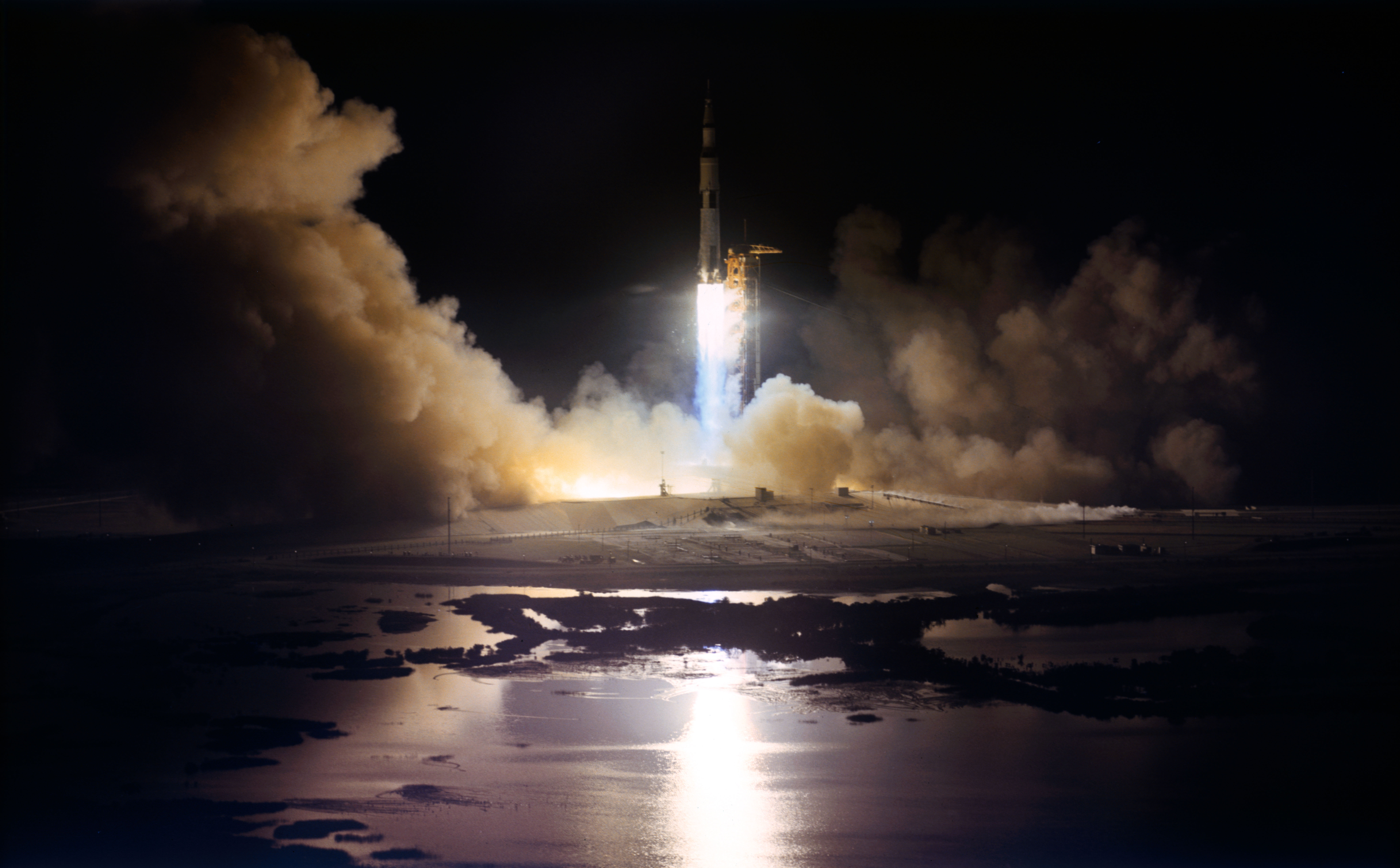
When did astronauts last walk on the moon?
Apollo 17, in December 1972. Eugene Cernan and Harrison Schmitt landed in the Taurus-Littrow valley on 11 December 1972, worked on the surface for three days… more…
- Image pending
Astronauts and life in space
How high do astronauts orbit the earth?
Crewed spaceflight today happens a few hundred kilometres up. The International Space Station orbits at about 400 km, lapping the planet roughly every 90… more…
