Did you know…
How does gravity form in space?
Short answer
Gravity is not formed in space; it is already everywhere. Any mass curves spacetime around it, so the Earth, the Sun and the International Space Station all pull. What astronauts lose in orbit is weight, not gravity: at the ISS altitude, around 400 km, Earth's pull is still roughly 90 % of its surface value, but everything is falling together.
Gravity does not switch on or off
The common phrase «zero gravity» is misleading. Gravity is a property of mass itself: in Newton's description, every mass attracts every other mass with a force that falls off as the square of the distance; in Einstein's, mass and energy curve spacetime and objects simply follow the straightest available path through that curvature. Neither description has a boundary beyond which gravity stops. It weakens with distance, but it never disappears, which is why the Moon stays bound to the Earth and the Earth to the Sun across enormous gaps.
At the altitude of the International Space Station, about 400 km above the surface, the Earth's gravitational pull is still close to 90 % of what it is at sea level. An astronaut there weighs almost what they would weigh on the ground, if you could put them on a scale that was not itself falling.
Why things float, then
What orbit removes is not gravity but the floor. A spacecraft in orbit is in continuous free fall: it moves sideways fast enough that, as it falls towards the Earth, the surface curves away beneath it at the same rate. The station, the astronaut and the loose pencil all accelerate identically, so nothing presses against anything else. The correct term is microgravity or free fall, and the same state is briefly reproduced on parabolic aircraft flights and in drop towers.
Making weight where there is none
Because gravity cannot be manufactured, engineers substitute acceleration for it. Spinning a structure pushes occupants against the outer wall, and the resulting centrifugal effect is indistinguishable from weight for anyone inside. Constant thrust would do the same. Neither has yet been used for crew on an operational spacecraft, so the practical countermeasures aboard the ISS remain resistive exercise and treadmill running with harnesses to limit bone and muscle loss.
More questions
- Image pending
Astronauts and life in space
Why does astronauts float in space?
Because they are in free fall, not because gravity is absent. At the International Space Station's altitude of about 400 km, Earth still pulls almost as hard… more…
- Image pending
Astronauts and life in space
Why did yuri gagarin die?
Gagarin died in an aircraft crash, not in a spacecraft. On 27 March 1968 the MiG-15UTI trainer he was flying with instructor Vladimir Seryogin went down in… more…
- Image pending
Astronauts and life in space
How much an astronaut is paid?
NASA's civilian astronauts are ordinary federal employees, paid on the General Schedule grade-and-step scale with no bonus per flight, per spacewalk or per… more…
.png)
Astronauts and life in space
Why is blue origin so slow?
Blue Origin was built on deliberate, owner-funded incrementalism: its motto is Gradatim Ferociter, step by step, and it spent its first two decades on… more…
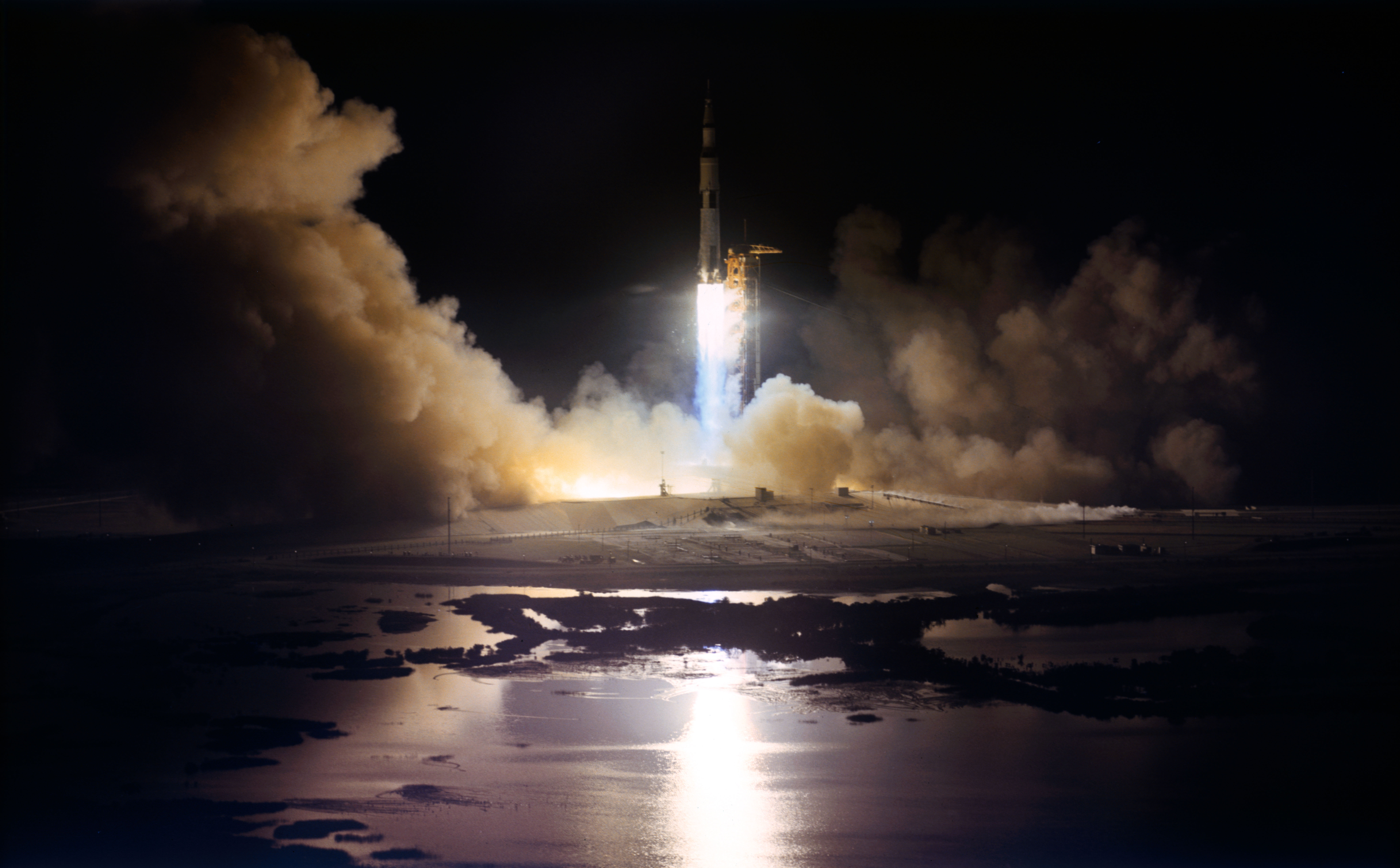
Astronauts and life in space
When did astronauts last walk on the moon?
Apollo 17, in December 1972. Eugene Cernan and Harrison Schmitt landed in the Taurus-Littrow valley on 11 December 1972, worked on the surface for three days… more…
- Image pending
Astronauts and life in space
How high do astronauts orbit the earth?
Crewed spaceflight today happens a few hundred kilometres up. The International Space Station orbits at about 400 km, lapping the planet roughly every 90… more…
