Did you know…
What is the gravity on Mars?
Short answer
On Mars, gravitational acceleration at the equator is 3.69 m/s², versus 9.78 m/s² on Earth; a ratio of 0.377. Mass stays the same, only weight decreases. Escape velocity is 5.03 km/s versus 11.19 km/s on Earth.

Where the number comes from
A planet's gravitational acceleration depends on its mass and radius. Mars has only a fraction of Earth's mass -the ratio is 0.107- and an equatorial radius of 3,396.2 kilometers versus Earth's 6,378.1 kilometers. At the equator, gravitational acceleration is 3.69 m/s², versus 9.78 m/s² on Earth (a ratio of 0.377); average values are 3.73 versus 9.82 m/s² (a ratio of 0.380). A person's mass stays unchanged there, but they weigh much less, which also changes the usual sense of force and balance.
What this means for landings and launches
For space exploration, reduced gravity is an advantage on departure and a problem on arrival. Escape velocity is 5.03 km/s, versus 11.19 km/s on Earth; that's why a rocket returning from Mars can be small. But landing lacks that braking help: surface atmospheric pressure is barely about 6.36 millibars, too little to slow a heavy vehicle with parachutes, yet too much to ignore the heat of entry. That's why every landing needs a heat shield, parachutes and engines.
In comparison, and for the body
Within the solar system, Mars sits between the Moon and Earth: on the Moon it's 1.62 m/s², on Mars an average of 3.73 m/s², and on Earth an average of 9.82 m/s². What effect an intermediate value like that, sustained for months, has on bones, muscles, circulation and eyes is unknown, because no one has ever lived that long under reduced gravity. The only certainty is that walking, lifting weight and falling behave differently: jumps go farther, falls are slower, and raised dust takes longer to settle.
More questions
Moon and Mars
How does neil armstrong look like?
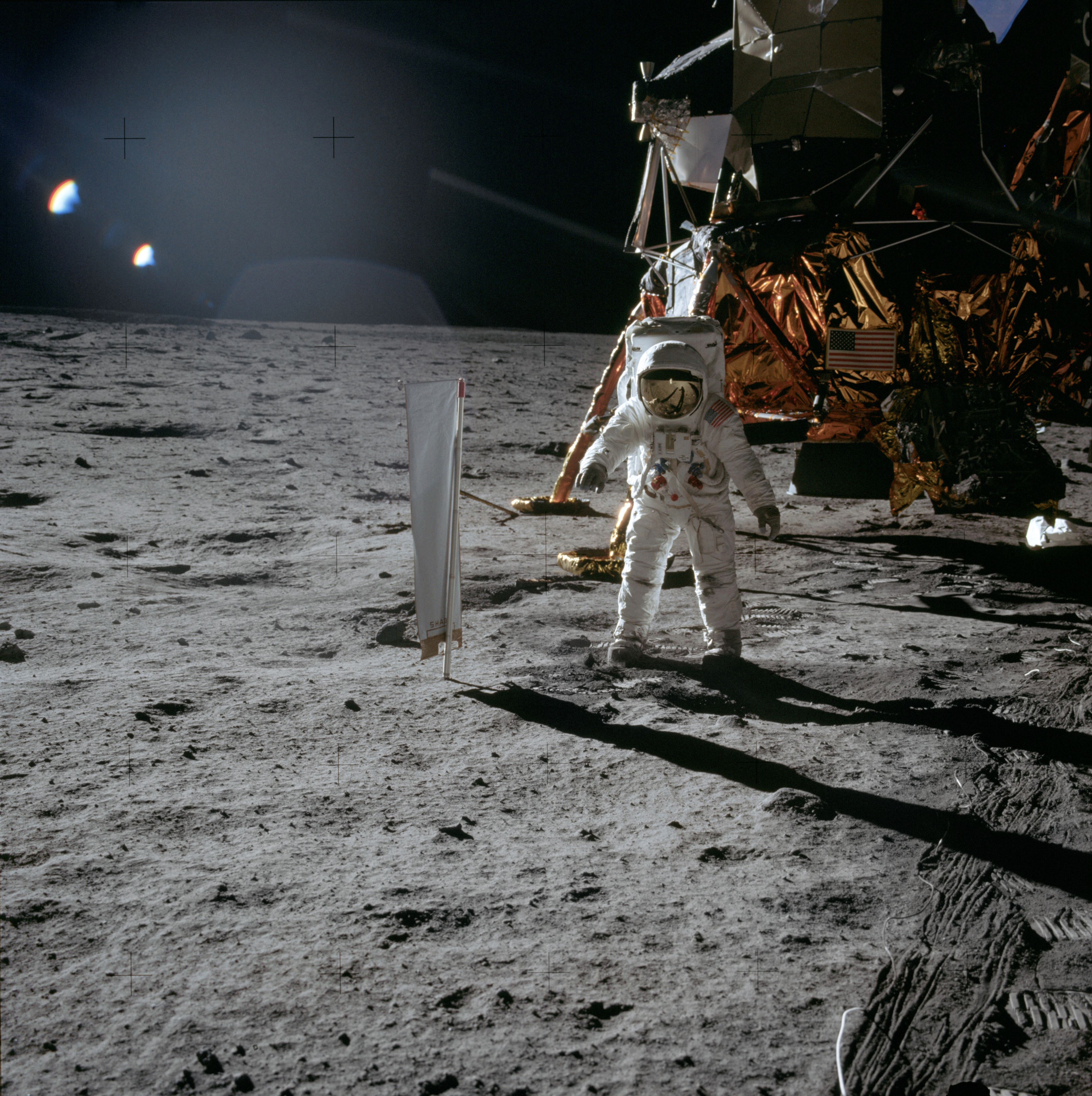
The face most people picture is not his: the gold-visored astronaut in the famous Apollo 11 photograph is Buzz Aldrin, shot by Armstrong. Armstrong himself is… more…

Richard Dorrell (CC BY SA), vía commons Moon and Mars
How does the moon affect the tides?
By pulling unevenly on it. Tidal forces vary inversely as the cube of the distance, so the near side of the Earth is tugged harder than the far side: one… more…
Moon and Mars
Why does neil armstrong have a hollywood star?
Strictly he does not have a star. Armstrong, Aldrin and Collins share four circular monuments resembling the Moon, one at each corner of Hollywood and Vine… more…
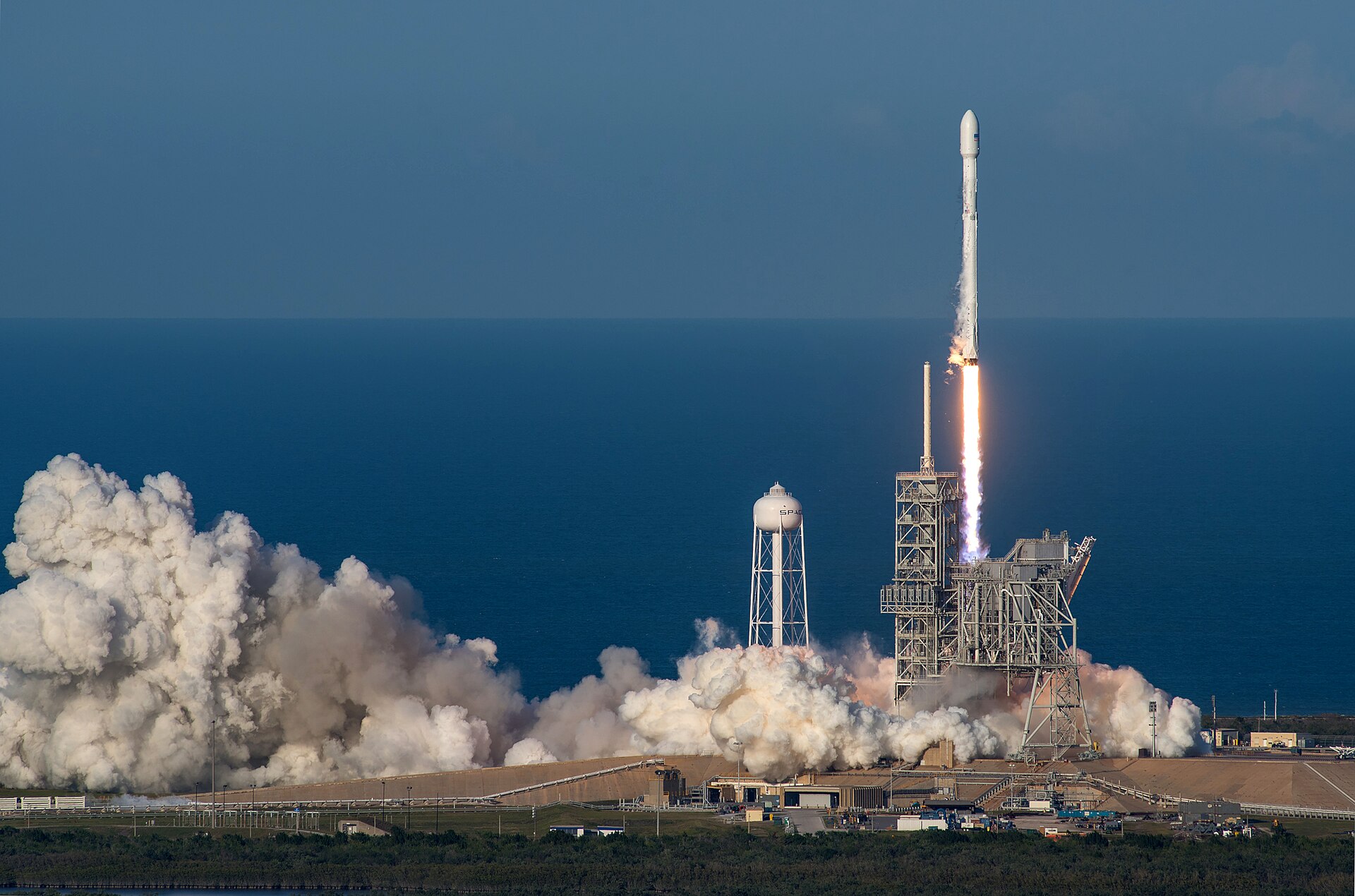
Foto: SpaceX (CC0) Moon and Mars
Why did falcon 9 hit the moon?
Because a spent upper stage on a lunar trajectory has no mission and no way to steer. A Falcon 9 upper stage from the January 2025 Firefly Blue Ghost 1 launch… more…
Moon and Mars
How much apollo 11 cost?
NASA never published a price for Apollo 11 on its own; what is documented is the program. The United States spent $25.8 billion on Project Apollo between 1960… more…
Moon and Mars
How much time neil armstrong spent on moon?
Armstrong and Aldrin spent 21 hours, 36 minutes on the Moon's surface, almost all of it inside the lunar module Eagle. Armstrong stepped onto the surface… more…

