Did you know…
When is the Moon in its first quarter?
Short answer
First quarter arrives when the Moon has traveled a quarter of its roughly 29.5-day phase cycle: it sits halfway between new moon and full moon, with half its disk lit. It rises around midday, stands high at dusk, and sets at midnight.

A quarter of the cycle, not a fixed date
The phase cycle repeats roughly every 29.5 days, the interval between two new moons. First quarter marks the moment when the Moon has traveled a quarter of that monthly journey and sits halfway between new moon and full moon. Don't confuse that rhythm with the orbital one: the Moon completes one trip around Earth in about 27.3 days, but while it does, the Earth-Moon system also moves around the Sun, so the illumination cycle we see from the ground ends up slightly longer than the orbit.
What you see and when to look
At first quarter we see half of the lit face: half bright disk, half shadow. The Moon rises around midday, stands high in the sky at dusk, and sets at midnight, so the early part of the evening is the best time to observe it. The boundary between light and shadow, the terminator, crosses the disk right through the middle, and that's where surface relief shows the most contrast: long shadows pick out the rims of craters and mountain ranges, something that doesn't happen at full moon, when light arrives head-on and flattens the view.
Waxing or waning: the same half-disk
First quarter and last quarter show the same illuminated fraction, but not the same half, and not at the same time. First quarter appears before full moon and dominates the evening sky; last quarter comes after and shows up in the early morning hours. The word "quarter" refers to the fraction of the cycle completed, not the portion of the disk visible, which is exactly half. Hence the apparent contradiction that something the eye reads as a half-moon is properly called a quarter.
More questions
Moon and Mars
How does neil armstrong look like?
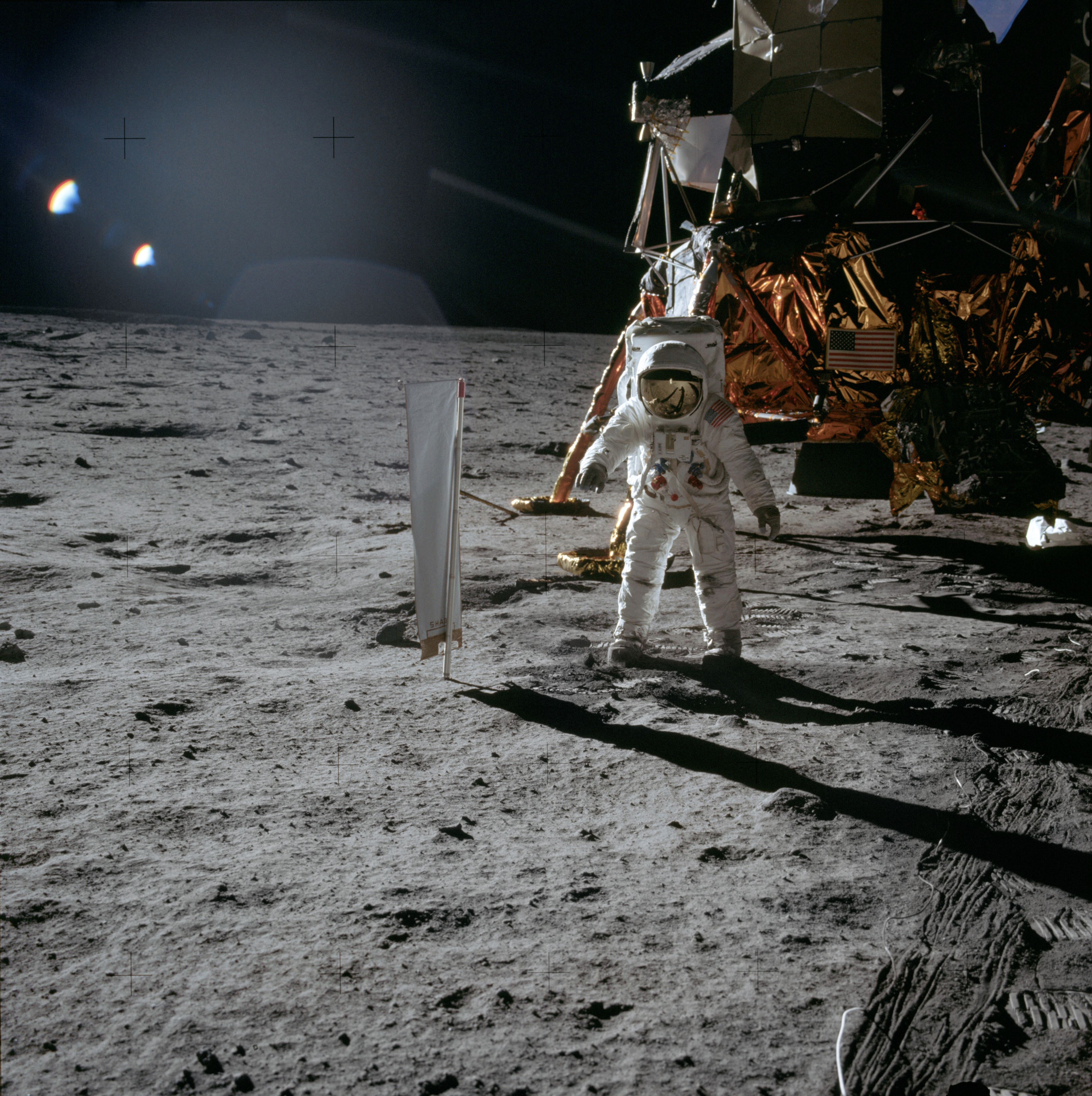
The face most people picture is not his: the gold-visored astronaut in the famous Apollo 11 photograph is Buzz Aldrin, shot by Armstrong. Armstrong himself is… more…

Richard Dorrell (CC BY SA), vía commons Moon and Mars
How does the moon affect the tides?
By pulling unevenly on it. Tidal forces vary inversely as the cube of the distance, so the near side of the Earth is tugged harder than the far side: one… more…
Moon and Mars
Why does neil armstrong have a hollywood star?
Strictly he does not have a star. Armstrong, Aldrin and Collins share four circular monuments resembling the Moon, one at each corner of Hollywood and Vine… more…
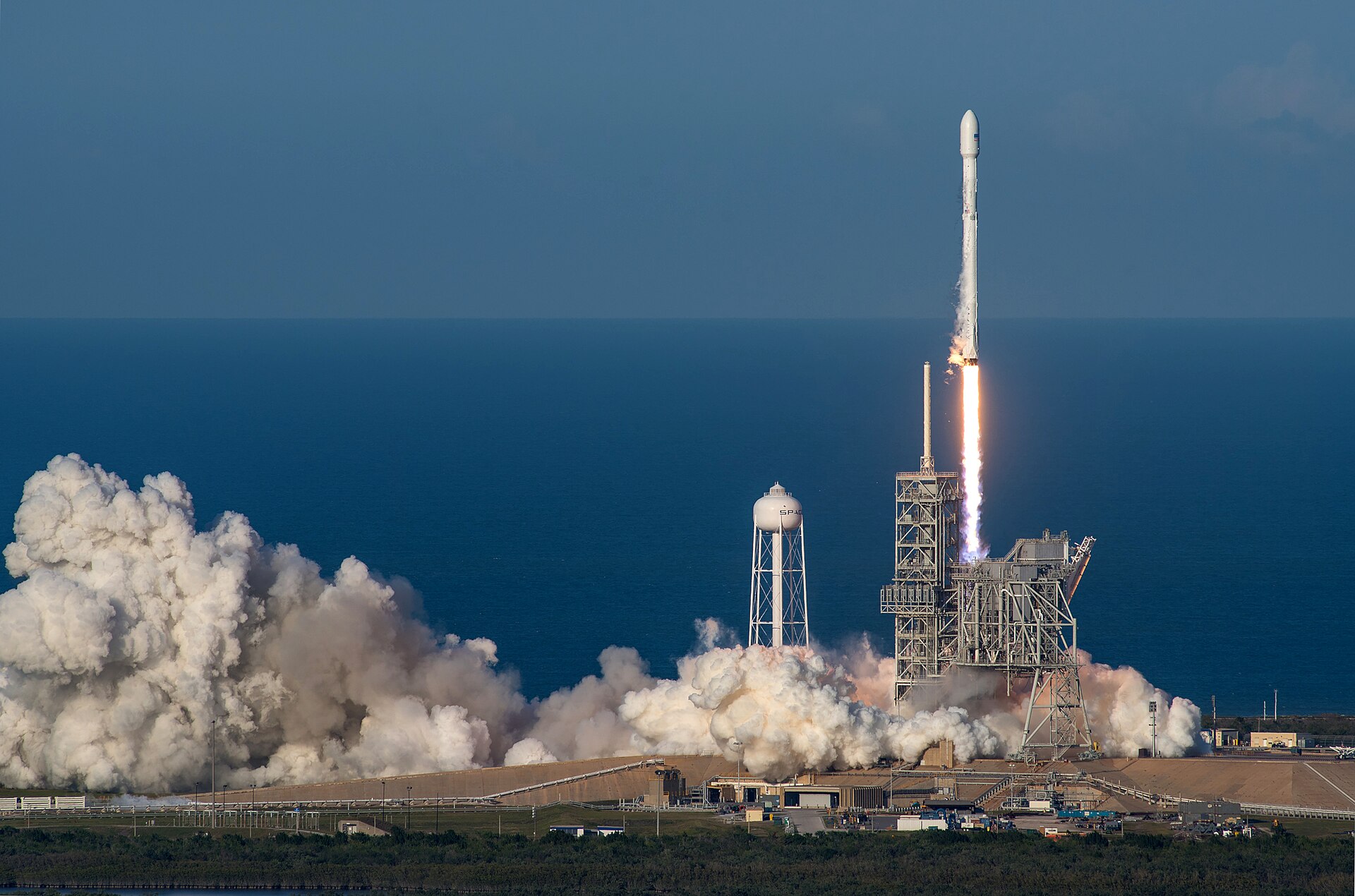
Foto: SpaceX (CC0) Moon and Mars
Why did falcon 9 hit the moon?
Because a spent upper stage on a lunar trajectory has no mission and no way to steer. A Falcon 9 upper stage from the January 2025 Firefly Blue Ghost 1 launch… more…
Moon and Mars
How much apollo 11 cost?
NASA never published a price for Apollo 11 on its own; what is documented is the program. The United States spent $25.8 billion on Project Apollo between 1960… more…
Moon and Mars
How much time neil armstrong spent on moon?
Armstrong and Aldrin spent 21 hours, 36 minutes on the Moon's surface, almost all of it inside the lunar module Eagle. Armstrong stepped onto the surface… more…

