Did you know…
What happens if a rocket crashes into the Moon?
Short answer
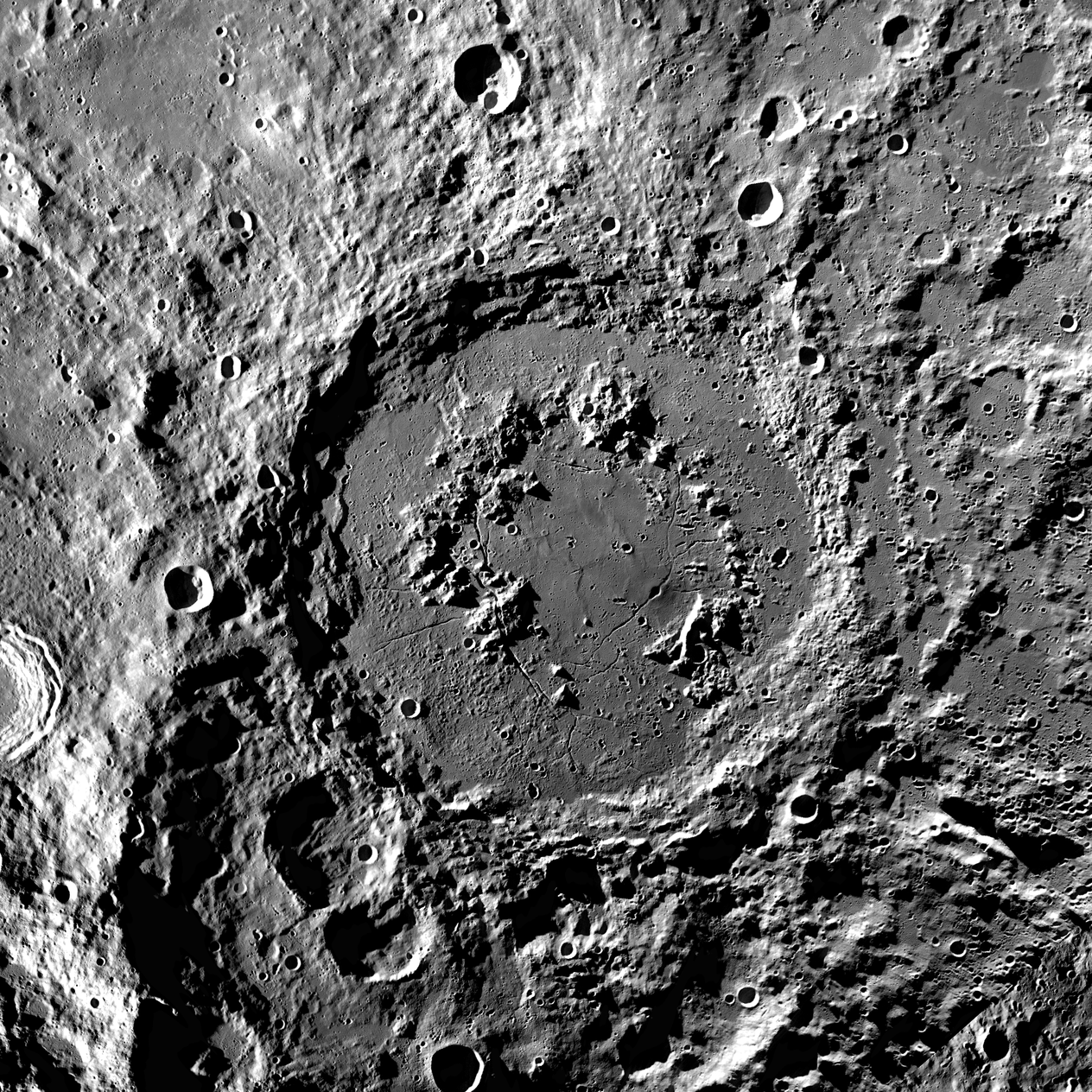
It leaves a crater and little else. With no atmosphere to slow it down or carry a shockwave, the impact excavates the regolith and throws material in every direction. The rocket body that crashed on March 4, 2022, near the Hertzsprung crater opened two adjoining craters, 18 and 16 meters across.
Without an atmosphere, impact is pure mechanics
The Moon has no air to slow an intruder down or to carry a shockwave, so an object that reaches it hits the ground at full speed. The energy goes into excavating the regolith and ejecting material in every direction: some of that dust falls back almost immediately, and some flies off on very long ballistic trajectories, since there's no atmosphere to hold it back. There's no boom, no fire, and no noticeable effect on the satellite's orbit.
The double crater of 2022
The best-documented case is a rocket body that struck near the Hertzsprung crater, on the far side, on March 4, 2022. NASA's LRO orbiter later photographed the exact spot — 5.226 degrees north, 234.486 degrees east, at an elevation of 1,863 meters — and found something unexpected: not one crater, but two. An 18-meter-diameter eastern crater overlapping a 16-meter western one.
No other known impact from a rocket body had left a double crater. The leading interpretation is that the object carried significant mass at both ends, which is unusual: a spent stage typically concentrates its mass at the engine end and is, for the rest of its length, little more than an empty tank.
Deliberate and accidental impacts
Not every collision is an accident. Several missions have deliberately ended against the surface to study the material thrown up, and others have done so by mistake: the Luna 25 probe left a crater about 10 meters across on August 19, 2023, on the inner rim — with a slope of more than 20 degrees — of the Pontécoulant G crater, at 57.865 degrees south and 61.360 degrees east. Every one of these marks stays forever, because there's no erosion on the Moon to wipe them away.
More questions
Moon and Mars
How does neil armstrong look like?
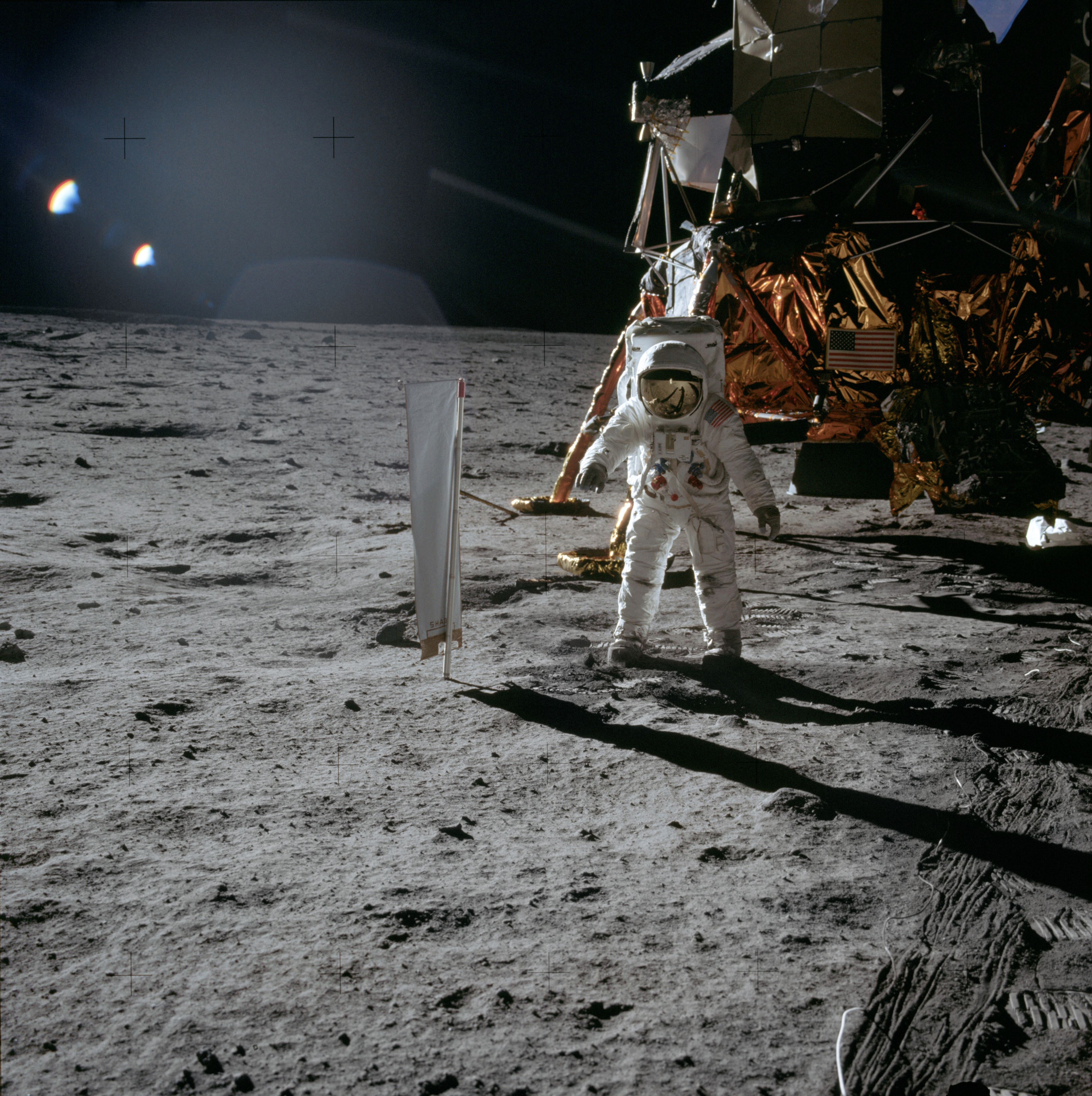
The face most people picture is not his: the gold-visored astronaut in the famous Apollo 11 photograph is Buzz Aldrin, shot by Armstrong. Armstrong himself is… more…

Richard Dorrell (CC BY SA), vía commons Moon and Mars
How does the moon affect the tides?
By pulling unevenly on it. Tidal forces vary inversely as the cube of the distance, so the near side of the Earth is tugged harder than the far side: one… more…
Moon and Mars
Why does neil armstrong have a hollywood star?
Strictly he does not have a star. Armstrong, Aldrin and Collins share four circular monuments resembling the Moon, one at each corner of Hollywood and Vine… more…
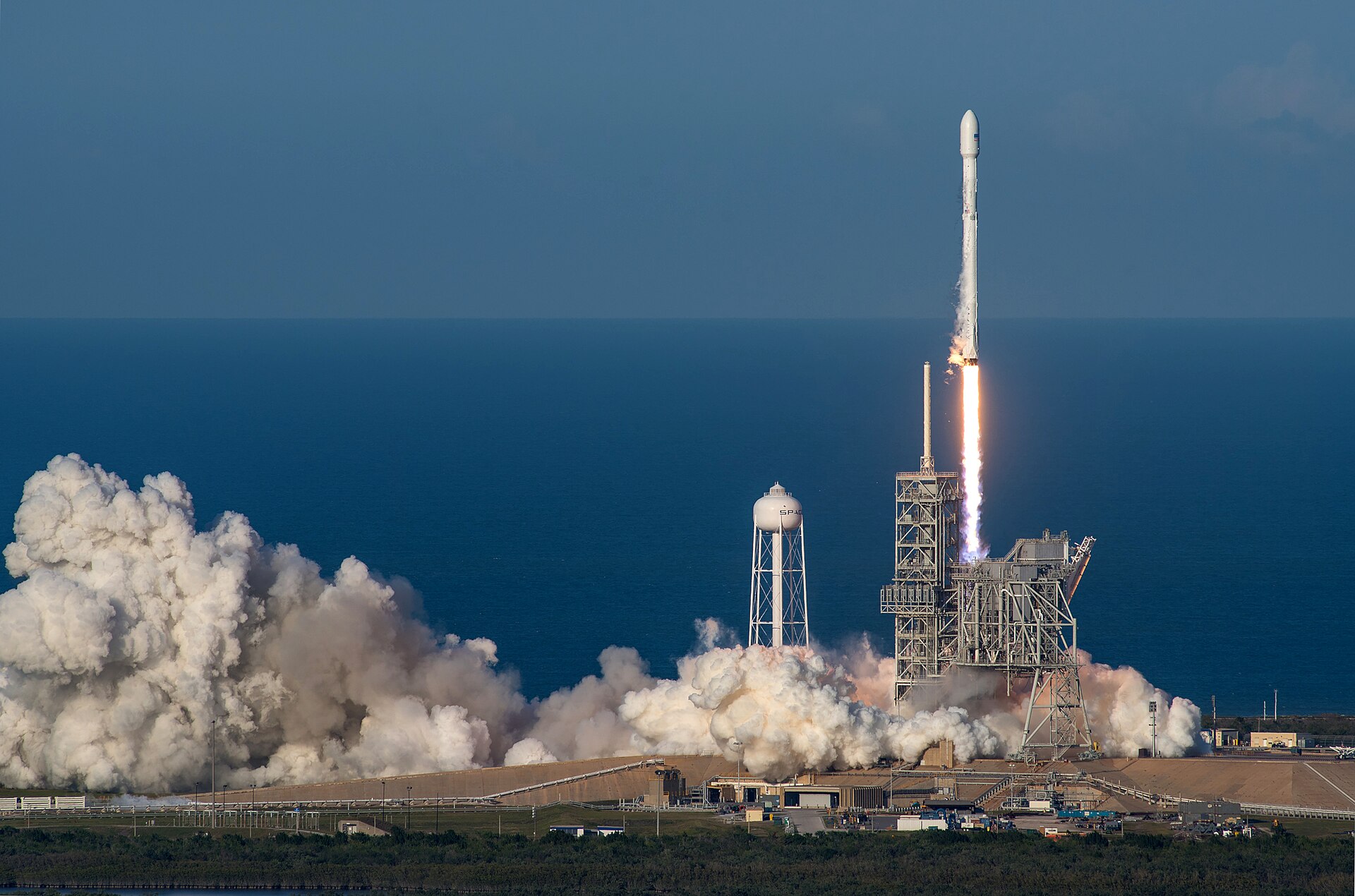
Foto: SpaceX (CC0) Moon and Mars
Why did falcon 9 hit the moon?
Because a spent upper stage on a lunar trajectory has no mission and no way to steer. A Falcon 9 upper stage from the January 2025 Firefly Blue Ghost 1 launch… more…
Moon and Mars
How much apollo 11 cost?
NASA never published a price for Apollo 11 on its own; what is documented is the program. The United States spent $25.8 billion on Project Apollo between 1960… more…
Moon and Mars
How much time neil armstrong spent on moon?
Armstrong and Aldrin spent 21 hours, 36 minutes on the Moon's surface, almost all of it inside the lunar module Eagle. Armstrong stepped onto the surface… more…

