Did you know…
How does the moon affect the tides?
Short answer
By pulling unevenly on it. Tidal forces vary inversely as the cube of the distance, so the near side of the Earth is tugged harder than the far side: one bulge of water forms under the Moon, another opposite. The Sun's tide-generating force is about half the Moon's.

Two bulges, not one
Gravity is one major force that creates tides: in 1687 Newton explained that ocean tides result from the gravitational attraction of the Sun and the Moon on the oceans of the Earth. The pull is not uniform. Ocean waters on the closer side of the Earth experience a greater gravitational pull from the Moon than waters on the opposite side, which raises a bulge in the water nearest the Moon and a high tide there; at the same time, inertial forces on the far side raise a similar bulge and a second high tide. The result is a standing distortion of the ocean that the planet rotates beneath, so most coasts pass through two high and two low waters as it turns.
Distance matters more than mass
Tidal generating forces vary inversely as the cube of the distance from the tide-generating object. That cube is why the small, near Moon beats the vast, distant Sun: the Sun's tide-generating force is about half that of the Moon, and the Moon is the dominant force affecting the Earth's tides. Mass alone would favor the Sun overwhelmingly; proximity overturns the comparison.
When the two line up
When the Sun and Moon are aligned, at full or new moon, their gravitational forces act in the same direction and produce more pronounced high and low tides, called spring tides. When they stand at right angles relative to the Earth, the Sun's pull partially cancels the Moon's and the result is the less pronounced highs and lows called neap tides. Local geography then does the rest: the same astronomical forcing produces a barely noticeable rise in one basin and a dramatic one in another, depending on the shape and depth of the coast.
More questions
Moon and Mars
How does neil armstrong look like?
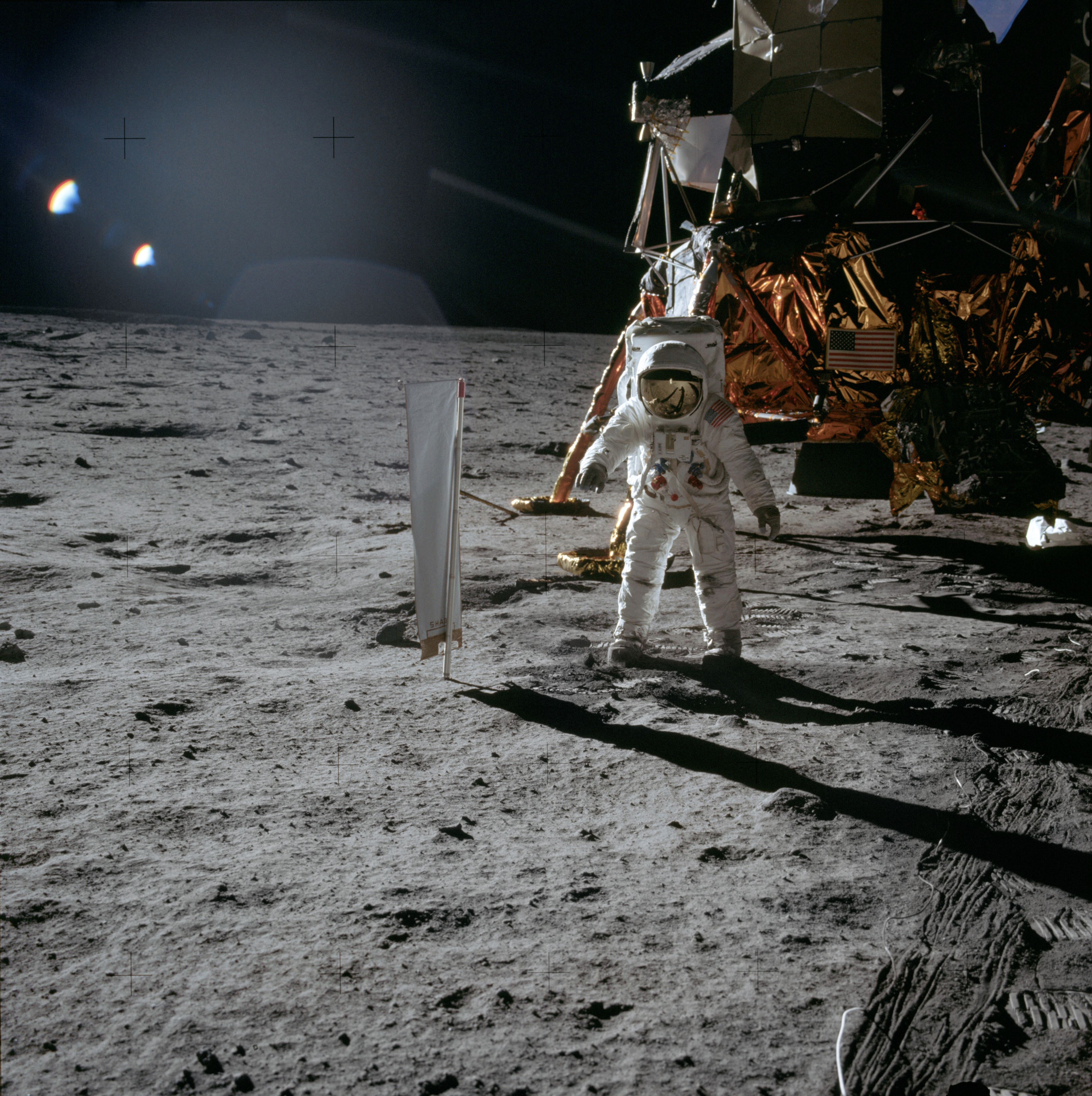
The face most people picture is not his: the gold-visored astronaut in the famous Apollo 11 photograph is Buzz Aldrin, shot by Armstrong. Armstrong himself is… more…
Moon and Mars
Why does neil armstrong have a hollywood star?
Strictly he does not have a star. Armstrong, Aldrin and Collins share four circular monuments resembling the Moon, one at each corner of Hollywood and Vine… more…
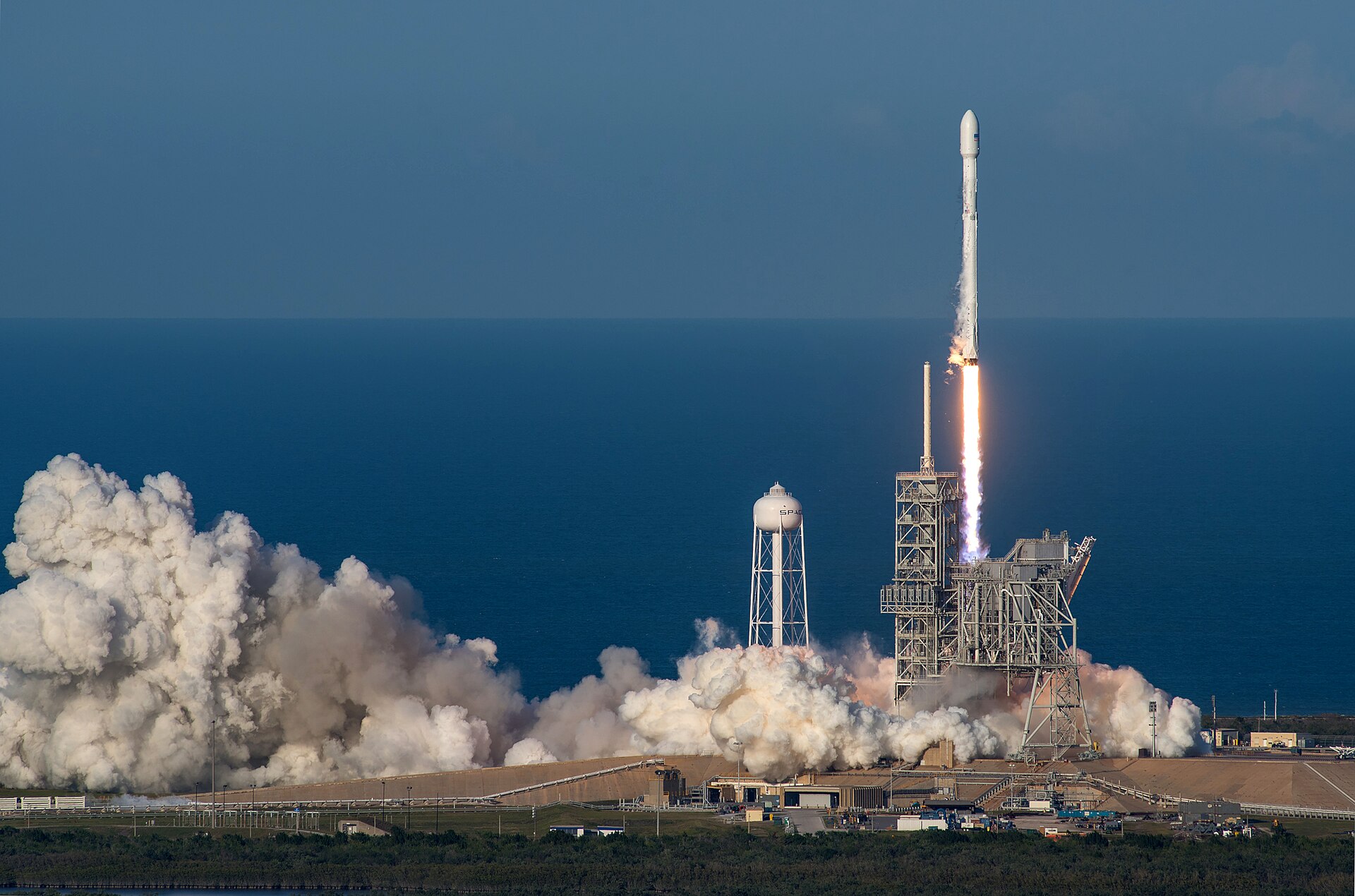
Foto: SpaceX (CC0) Moon and Mars
Why did falcon 9 hit the moon?
Because a spent upper stage on a lunar trajectory has no mission and no way to steer. A Falcon 9 upper stage from the January 2025 Firefly Blue Ghost 1 launch… more…
Moon and Mars
How much apollo 11 cost?
NASA never published a price for Apollo 11 on its own; what is documented is the program. The United States spent $25.8 billion on Project Apollo between 1960… more…
Moon and Mars
How much time neil armstrong spent on moon?
Armstrong and Aldrin spent 21 hours, 36 minutes on the Moon's surface, almost all of it inside the lunar module Eagle. Armstrong stepped onto the surface… more…
Moon and Mars
How much did neil armstrong get paid?
Nothing extra for the Moon. Armstrong flew as a civilian federal employee and was paid the salary of the post he held, with no per-flight fee; when NACA hired… more…

