Did you know…
Can the Moon be seen during the day?
Short answer
Yes, and it happens almost daily. The Moon is above the horizon both day and night; what changes is that during the day it competes with a lit-up sky. NASA describes it as the second-brightest object in the daytime sky, after the Sun: you just need to look in the right direction to spot its pale disk.

It's up there half the time
"The Moon is above the horizon during the day as much as during the night, you just don't notice it as easily," NASA itself answers. It rises and sets for the same reason the Sun does — the Earth rotates once a day — but its rising time shifts a little each day, so over the course of a month it cycles through every possible hour. For much of that cycle it shares the sky with the Sun, so a daytime Moon is nothing out of the ordinary.
Why it's hard to see
The problem isn't absolute brightness: the Moon is the brightest object in the night sky and the second-brightest in the daytime sky, after the Sun. What fails is contrast. During the day, the blue sky is lit by scattered sunlight, and a pale disk against a bright background is easily lost, especially when the visible phase is a thin sliver that returns little light. The same Moon that dazzles at midnight looks like a cut-out of paper at four in the afternoon.
Where to look
The key is the phase. A first-quarter Moon rises in the afternoon and sits high above the horizon at dusk: it's the easiest case, because in the hours before sunset it's already perfectly positioned with the Sun still up. A last-quarter Moon does the same in the morning, high in the sky at sunrise and during the early hours of the day.
To find it, look away from the Sun, pick a day with a clear sky, and search for a whitish, almost translucent disk, which often goes unnoticed until the eye focuses on it. Binoculars confirm it in seconds and let you make out the maria, the dark stretches of solidified lava. Once spotted the first time, it's hard not to see it afterward.
More questions
Moon and Mars
How does neil armstrong look like?
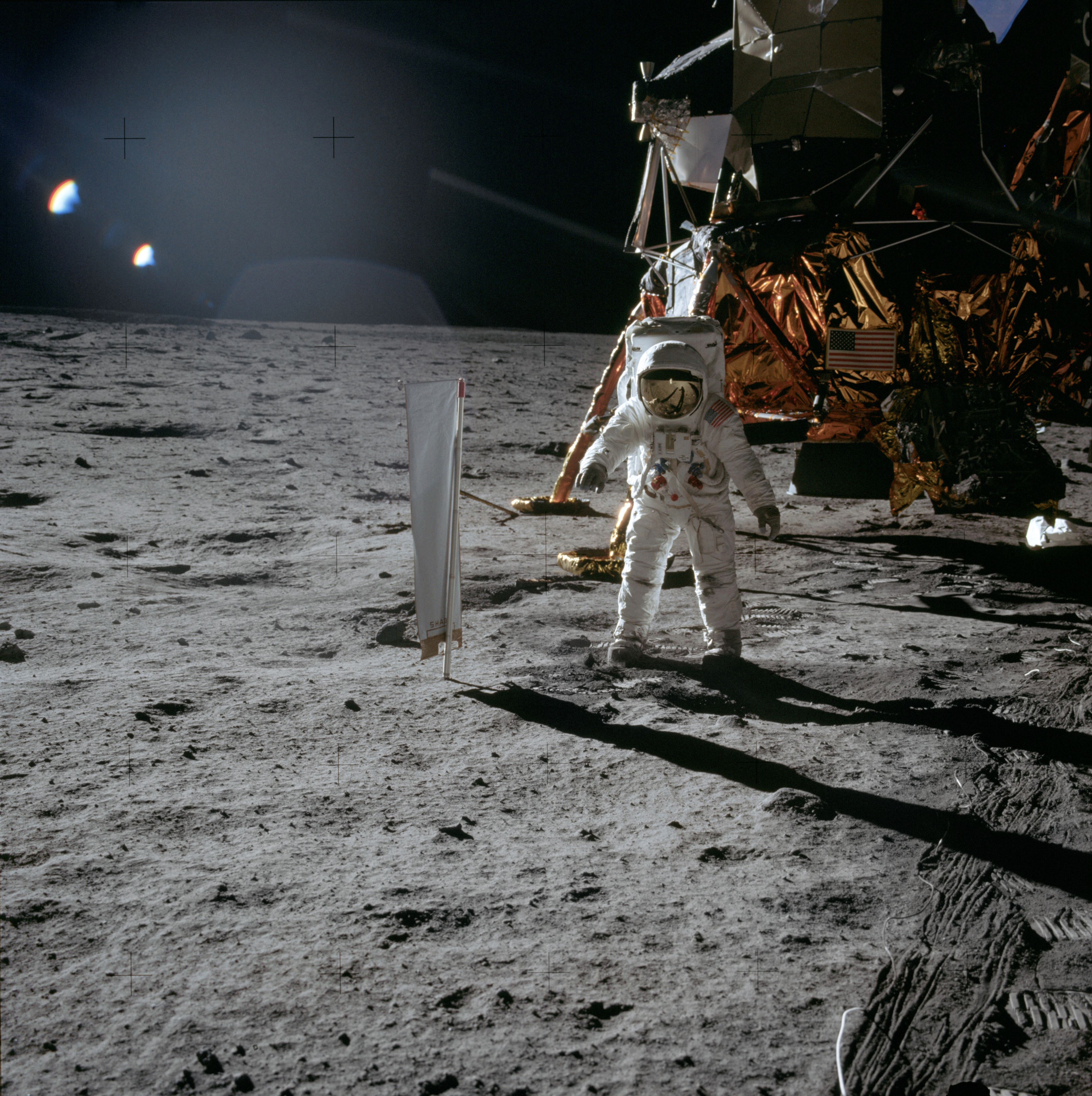
The face most people picture is not his: the gold-visored astronaut in the famous Apollo 11 photograph is Buzz Aldrin, shot by Armstrong. Armstrong himself is… more…

Richard Dorrell (CC BY SA), vía commons Moon and Mars
How does the moon affect the tides?
By pulling unevenly on it. Tidal forces vary inversely as the cube of the distance, so the near side of the Earth is tugged harder than the far side: one… more…
Moon and Mars
Why does neil armstrong have a hollywood star?
Strictly he does not have a star. Armstrong, Aldrin and Collins share four circular monuments resembling the Moon, one at each corner of Hollywood and Vine… more…
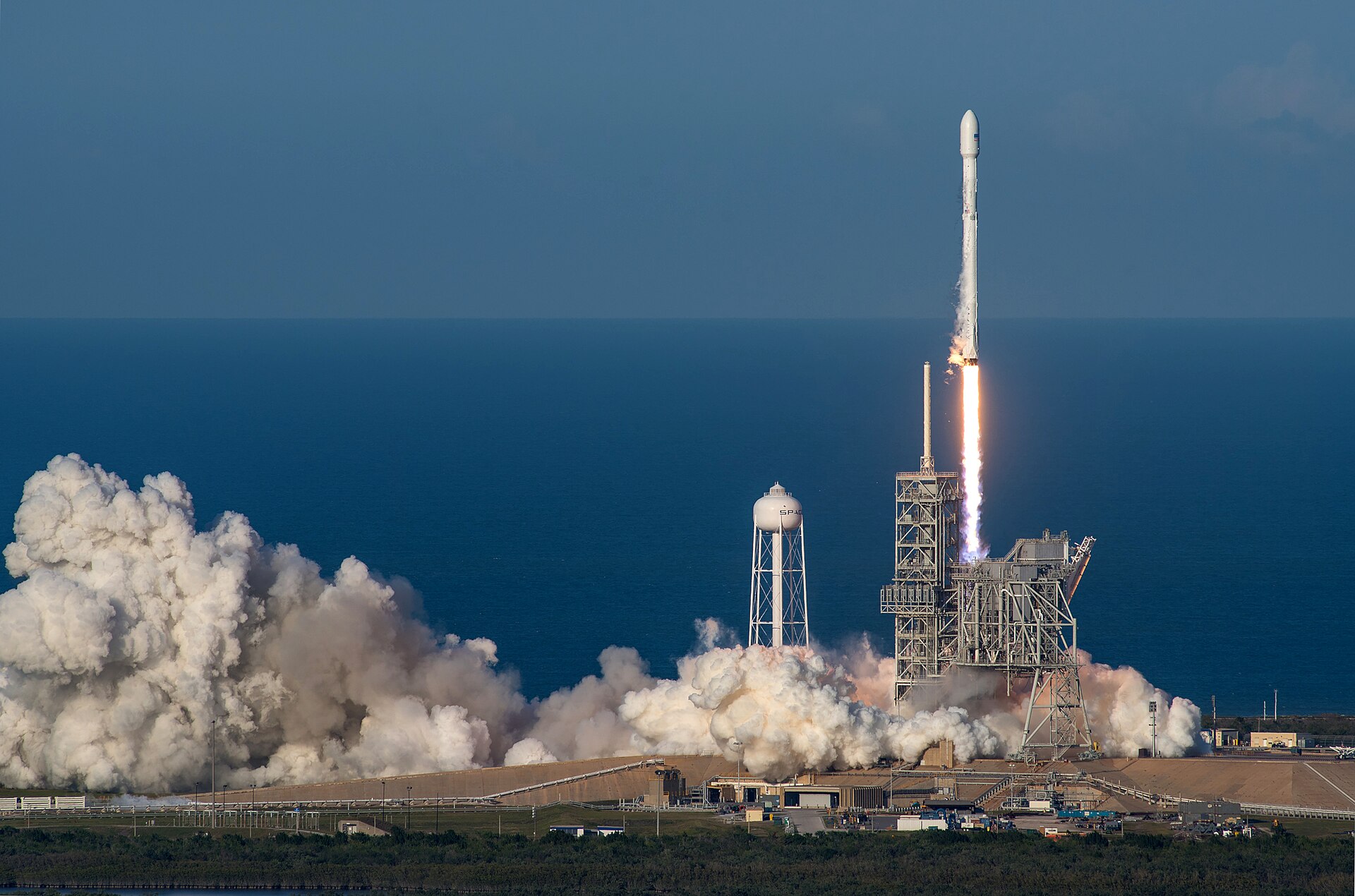
Foto: SpaceX (CC0) Moon and Mars
Why did falcon 9 hit the moon?
Because a spent upper stage on a lunar trajectory has no mission and no way to steer. A Falcon 9 upper stage from the January 2025 Firefly Blue Ghost 1 launch… more…
Moon and Mars
How much apollo 11 cost?
NASA never published a price for Apollo 11 on its own; what is documented is the program. The United States spent $25.8 billion on Project Apollo between 1960… more…
Moon and Mars
How much time neil armstrong spent on moon?
Armstrong and Aldrin spent 21 hours, 36 minutes on the Moon's surface, almost all of it inside the lunar module Eagle. Armstrong stepped onto the surface… more…

