Supermarine Spitfire variant
Supermarine Spitfire F.22
The F.21 with a cut-back rear fuselage and teardrop canopy, a 24-volt electrical system and, on most aircraft, the enlarged Spiteful tail surfaces. 287 were built and their career was almost entirely post-war, largely with the Royal Auxiliary Air Force.
- 287
- Units built
History
Seeing behind
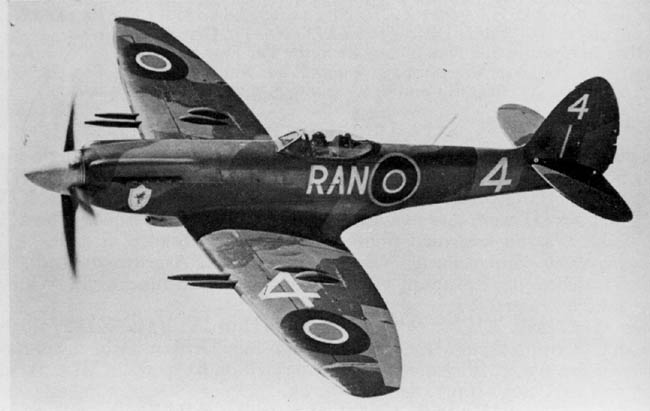
Mechanically the Mk 22 was a Mk 21. What changed was the view: the cut-back rear fuselage and teardrop canopy, already introduced on other marks, finally gave the pilot the rearward visibility the Spitfire had lacked for six years. The other substantive change was electrical, the system moving from 12 to 24 volts, the first in the family to do so, which allowed more demanding equipment to be carried. Most aircraft left the factory with the enlarged fin and rudder of the Supermarine Spiteful, an addition that at last tamed the Griffon's torque.
Manufacture
287 aircraft were built, 260 at the vast Castle Bromwich plant and 27 by Supermarine at South Marston. That makes the Mk 22 the most numerous of the redesigned-wing Spitfires, ahead of both the Mk 21 and the Mk 24, although it arrived when the RAF was already looking towards jets.
Service
Only one regular RAF unit, 73 Squadron on Malta, flew the Mk 22. Its real home was the reserve: twelve Royal Auxiliary Air Force squadrons operated it until March 1951, and it also equipped flying refresher schools, where many pilots logged their last piston hours before converting to jets.
A second life
In May 1955 the surviving F.22s were declared obsolete for all RAF purposes. Many were sold back to Vickers-Armstrongs, refurbished and placed abroad, with batches going to Southern Rhodesia, Egypt and Syria. Syria kept its F Mk 22s until 1953, one of the last chapters of the Spitfire as an operational combat aircraft.
Multimedia


_Squadron_at_Ringway%2C_1949-800.webp)