Allgemeine Luftfahrt · Zivil · Vereinigtes Königreich
Britten-Norman Islander
- 13. Juni 1965
- Erstflug
- 1967
- Indienststellung
- Im Dienst
- Status
- 1.280
- Gebaute Exemplare
_11-1600.webp)


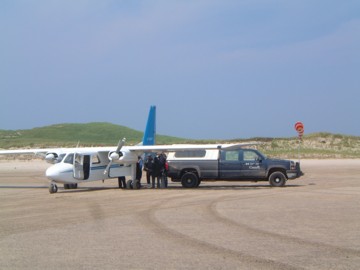
Die Britten-Norman Islander ist ein britisches leichtes zweimotoriges Mehrzweckflugzeug für einen Piloten und neun Passagiere, in den Sechzigerjahren für den Verkehr der dritten Ebene zwischen kurzen und schlecht hergerichteten Pisten entworfen. Sie flog erstmals am 13. Juni 1965, erhielt im August 1967 die britische Zulassung und wird weiterhin gebaut, mit 1280 gefertigten Exemplaren und einer 2023 angekündigten Rückkehr in das ursprüngliche Werk in Bembridge.
Verwandte Ereignisse
Verwandte Einträge
Kategorie
Geschichte
John Britten und Desmond Norman, Partner im Umbau von Agrarflugzeugen, begannen 1963 mit der Arbeit an einem einfachen und billigen zweimotorigen Kolbenflugzeug. Ihre Lesart des Marktes traf ins Schwarze: Den aufkommenden Fluggesellschaften der dritten Ebene lag mehr an der Nutzlast als an Geschwindigkeit oder Reichweite, und so opferte das neue Flugzeug Flugleistungen zugunsten der Kapazität. Tragflächen und Leitwerksflächen erhielten konstante Tiefe und Dicke, und sämtliche Flügelrippen sind identisch — Entscheidungen, die die Fertigung verbilligen sollten. Der Prototyp G-ATCT flog am 13. Juni 1965 mit zwei Triebwerken Rolls-Royce Continental IO-360-B und war vier Tage später auf dem Pariser Luftfahrtsalon zu sehen; die Erprobung riet dazu, die Spannweite zu vergrößern und die Avco Lycoming O-540-E zu übernehmen, die als Standardmotorisierung blieben. Das erste Serienflugzeug flog am 24. April 1967, und die britische Zulassung kam im August desselben Jahres.
Die Islander ist ein Schulterdecker mit rechteckigem Rumpf und starrem Bugradfahrwerk, ohne Mittelgang: Ihre Sitzreihen nutzen eine kaum 1,09 m breite Kabine bis zum Letzten aus, mit zwei Türen an Backbord und einer an Steuerbord. Diese Kabine lässt sich in kurzer Zeit umrüsten, woraus sich die Vielfalt der Aufgaben des Musters erklärt: Linien- und Charterflüge, Fracht, Ambulanz mit drei Tragen, Agrarflug, Luftüberwachung, Absetzen von Fallschirmspringern und Polizeiaufgaben. Die 1970 unter dem Namen Defender vorgestellte Militärversion ergänzte Aufhängungen unter der Tragfläche, und die Maritime Defender war auf Küstenpatrouille und Seenotrettung ausgerichtet. Ab 1980 war sie mit Turboprops Allison 250 bestellbar, einer Konfiguration mit der Bezeichnung BN-2T, deren erste Exemplare 1981 in Dienst gingen.
Die Nachfrage überstieg bald die Kapazität von Bembridge auf der Isle of Wight. Die Produktion verteilte sich über Europa — Montage in Rumänien, Endausstattung in Belgien, nachdem Fairey das Unternehmen 1972 gekauft hatte — und 1975 kam eine philippinische Lizenz hinzu; mehr als 500 Maschinen verließen die rumänische Linie. 1974 übertrafen die Verkäufe den Rekord von 548 Bestellungen, den das meistverkaufte britische zweimotorige Verkehrsflugzeug hielt, und 1982 wurde die Islander Nummer 1000 ausgeliefert. Danach fielen die Verkäufe, zum Teil weil die bereits verkauften Flugzeuge sehr lange hielten: 2016 sprach der Hersteller von rund 500 Betreibern in mehr als 120 Ländern, und im Oktober 2019 standen noch 800 Maschinen im Einsatz. Das Muster hält einen kuriosen Rekord: Für Loganair bedient es die kürzeste Linienstrecke der Welt, zwischen Westray und Papa Westray, 2,7 km lang und mit etwa zwei Minuten Flugzeit.
Varianten
| BN-2 (prototipo) | BN-2A-10 | BN-2A-2 | BN-2A-20 | BN-2A-21 | BN-2A-23 | BN-2A-24 | BN-2A-25 | BN-2A-26 | BN-2A-27 | BN-2A-3 | BN-2A-30 (hidroavión con flotadores) | BN-2A-41 Turbo Islander | BN-2A-6 | BN-2A-7 | BN-2A-8 | BN-2A-9 | BN-2A Islander | BN-2B-20 | BN-2B-21 | BN-2B-26 | BN-2B-27 | BN-2B Defender | BN-2B Islander II | BN-2 con fanes entubados (banco de pruebas) | BN-2E Islander Super | BN-2T-4R AEW Defender | BN-2T-4S Defender 4000 | BN-2T Turbine Islander | Defender AL Mk 1 | Defender AL Mk 2 / R2 | Defender T Mk 3 | Islander AL1 / R1 | Islander CC2 / CC2A | Maritime Defender | Project Fresson (Islander eléctrico) | |
|---|---|---|---|---|---|---|---|---|---|---|---|---|---|---|---|---|---|---|---|---|---|---|---|---|---|---|---|---|---|---|---|---|---|---|---|---|
| Erstflug | 13. Juni 1965 | — | — | — | — | — | — | — | — | — | — | — | — | — | — | — | — | — | — | — | — | — | — | — | — | — | — | — | — | — | — | — | — | — | — | — |
| Luftfahrzeugtyp | Light utility aircraft | Light utility aircraft | Light utility aircraft | Avión utilitario ligero | Light utility aircraft | Light utility aircraft | Light utility aircraft | Light utility aircraft | Light utility aircraft | Light utility aircraft | Light utility aircraft | Light utility aircraft | Avión utilitario ligero | Light utility aircraft | Light utility aircraft | Light utility aircraft | Light utility aircraft | Light utility aircraft | Light utility aircraft | Avión utilitario ligero | Light utility aircraft | Light utility aircraft | Armed light patrol and surveillance aircraft | Light utility aircraft | Light utility aircraft | Light utility aircraft | Light military surveillance aircraft | Armed light patrol and surveillance aircraft | Light utility aircraft | Light military surveillance aircraft | Light military surveillance aircraft | Light military training aircraft | Light military liaison and reconnaissance aircraft | Light military liaison aircraft | Armed light maritime patrol aircraft | Light utility aircraft |
| Antrieb | 2 × Rolls-Royce/Continental IO-360-B piston engines of 157 kW (210 hp) each; the prototype was soon re-engined with 194 kW Lycoming O-540-E4C5 units. | 2 × turbocharged, fuel-injected Lycoming TIO-540-H1A piston engines of 201 kW (270 hp) each, on the BN-2A-8 airframe with raised take-off weight. | 2 × fuel-injected Lycoming IO-540-K1B5 piston engines of 224 kW (300 hp) each. | 2 × motor de pistón de inyección Lycoming IO-540-K1B5 de 224 kW (300 hp) unitarios. | 2 × fuel-injected Lycoming IO-540-K1B5 piston engines of 224 kW (300 hp) each. | 2 × fuel-injected Lycoming IO-540-K1B5 piston engines of 224 kW (300 hp) each: a single BN-2A-24 re-engined and fitted with wingtip tanks. | 2 × Lycoming O-540-E4C5 piston engines of 194 kW (260 hp) each, as on the BN-2A-27 it derives from. | 2 × Lycoming O-540-E4C5 piston engines of 194 kW (260 hp) each: essentially a BN-2A-26 with the BN-2A-8S long nose, built by Fairey at Gosselies as the donor airframe for the BN-2A-41 prototype. | 2 × Lycoming O-540-E4C5 piston engines of 194 kW (260 hp) each. | 2 × Lycoming O-540-E4C5 piston engines of 194 kW (260 hp) each. | 2 × fuel-injected Lycoming IO-540-K1B5 piston engines of 224 kW (300 hp) each. | 2 × Lycoming O-540-E4C5 piston engines of 194 kW (260 hp) each; the BN-2A-3x family covered the floatplane and amphibian projects, the even-numbered designations taking the 224 kW engine instead. | 2 × turbohélice Lycoming LTP 101 con hélices de abanderamiento automático, montados unos 15 cm más al exterior que los pistones de serie. | 2 × Lycoming O-540-E4C5 piston engines of 194 kW (260 hp) each. | 2 × Lycoming O-540-E4C5 piston engines of 194 kW (260 hp) each. | 2 × Lycoming O-540-E4C5 piston engines of 194 kW (260 hp) each. | 2 × Lycoming O-540-E4C5 piston engines of 194 kW (260 hp) each. | 2 × Lycoming O-540-E4C5 piston engines of 194 kW (260 hp) each. | 2 × fuel-injected Lycoming IO-540-K1B5 piston engines of 224 kW (300 hp) each, with two- or three-blade Hartzell propellers depending on modification. | 2 × motor de pistón de inyección Lycoming IO-540-K1B5 de 224 kW (300 hp) unitarios. | 2 × Lycoming O-540-E4C5 piston engines of 194 kW (260 hp) each; some aircraft carry the three-blade Hartzell propeller of modification NB-M-1361. | 2 × Lycoming O-540-E4C5 piston engines of 194 kW (260 hp) each. | 2 × fuel-injected Lycoming IO-540-K1B5 piston engines of 224 kW (300 hp) each. | 2 × Lycoming O-540-E4C5 piston engines of 194 kW (260 hp) each, driving two-blade Hartzell constant-speed propellers of 1.98 m diameter. | 2 × Lycoming O-540-E4C5 piston engines of 194 kW (260 hp) each driving Dowty Rotol ducted fans, tested in 1977 to cut noise against the conventional propeller; the installation called for local strengthening of the main wing spar at the root. | 2 × Lycoming O-540-E4C5 piston engines of 194 kW (260 hp) each, unchanged from the BN-2 it was converted from. | 2 × Allison 250-B17F/1 turboprops of 298 kW (400 shp) each, with 1.98 m three-blade Hartzell propellers. | 2 × Allison 250-B17F/1 turboprops of 298 kW (400 shp) each, with three-blade Hartzell propellers. | 2 × Allison 250-B17C turboprops flat-rated at 239 kW (320 shp) each, governed to a maximum of 2030 propeller rpm, with 1.98 m three-blade Hartzell propellers. | 2 × Allison 250-B17F/1 turboprops of 298 kW (400 shp) each. | 2 × Allison 250-B17F/1 turboprops of 298 kW (400 shp) each. | 2 × Allison 250-B17F/1 turboprops of 298 kW (400 shp) each. | 2 × Allison 250-B17C turboprops flat-rated at 239 kW (320 shp) each. | 2 × Allison 250-B17C turboprops flat-rated at 239 kW (320 shp) each. | 2 × fuel-injected Lycoming IO-540-K1B5 piston engines of 224 kW (300 hp) each. | Hydrogen fuel-cell electric powertrain (HFCPS) by Cranfield Aerospace Solutions: 240 kW of electrical power yielding up to 220 kW at the motor. The demonstrator replaces one of the Islander's two piston engines. |
| Triebwerke | 2 × Rolls-Royce/Continental IO-360-B | 2 × Lycoming TIO-540-H1A | 2 × Lycoming IO-540-K1B5 | 2 × Lycoming IO-540-K1B5 | 2 × Lycoming IO-540-K1B5 | 2 × Lycoming IO-540-K1B5 | 2 × Lycoming O-540-E4C5 | 2 × Lycoming O-540-E4C5 | 2 × Lycoming O-540-E4C5 | 2 × Lycoming O-540-E4C5 | 2 × Lycoming IO-540-K1B5 | 2 × Lycoming O-540-E4C5 | 2 × Lycoming LTP 101 | 2 × Lycoming O-540-E4C5 | 2 × Lycoming O-540-E4C5 | 2 × Lycoming O-540-E4C5 | 2 × Lycoming O-540-E4C5 | 2 × Lycoming O-540-E4C5 | 2 × Lycoming IO-540-K1B5 | 2 × Lycoming IO-540-K1B5 | 2 × Lycoming O-540-E4C5 | 2 × Lycoming O-540-E4C5 | 2 × Lycoming IO-540-K1B5 | 2 × Lycoming O-540-E4C5 | 2 × Lycoming O-540-E4C5 | 2 × Lycoming O-540-E4C5 | 2 × Allison 250-B17F/1 | 2 × Allison 250-B17F/1 | 2 × Allison 250-B17C | 2 × Allison 250-B17F/1 | 2 × Allison 250-B17F/1 | 2 × Allison 250-B17F/1 | 2 × Allison 250-B17C | 2 × Allison 250-B17C | 2 × Lycoming IO-540-K1B5 | Cranfield Aerospace Solutions HFCPS (pila de combustible de hidrógeno) |
| Leistung je Triebwerk | 211 hp | 270 hp | 300 hp | 300 hp | 300 hp | 300 hp | 260 hp | 260 hp | 260 hp | 260 hp | 300 hp | 260 hp | — | 260 hp | 260 hp | 260 hp | 260 hp | 260 hp | 300 hp | 300 hp | 260 hp | 260 hp | 300 hp | 260 hp | 260 hp | 260 hp | 400 hp Bester Wert dieser Zeile | 400 hp Bester Wert dieser Zeile | 321 hp | 400 hp Bester Wert dieser Zeile | 400 hp Bester Wert dieser Zeile | 400 hp Bester Wert dieser Zeile | 321 hp | 321 hp | 300 hp | 220 kW |
| Länge | 10,9 m | — | — | — | — | — | — | — | — | — | — | — | — | — | — | — | — | 10,9 m | — | — | — | — | — | 10,9 m | — | — | 12,4 m Bester Wert dieser Zeile | 12,2 m | 10,9 m | — | — | — | — | — | — | — |
| Spannweite | — | — | — | — | — | — | — | — | — | — | — | — | — | — | — | — | — | — | — | — | — | — | — | 14,9 m | — | — | 16,2 m Bester Wert dieser Zeile | 16,2 m Bester Wert dieser Zeile | — | — | — | — | — | — | — | — |
| Höhe | 4,2 m | — | — | — | — | — | — | — | — | — | — | — | — | — | — | — | — | 4,2 m | — | — | — | — | — | 4,2 m | — | — | 4,2 m | 4,4 m | 4,5 m Bester Wert dieser Zeile | — | — | — | — | — | — | — |
| Flügelfläche | 30,2 m² | — | 30,2 m² | — | — | — | — | — | — | — | — | — | — | 30,2 m² | — | — | — | 30,2 m² | 30,2 m² | — | 30,2 m² | — | — | 30,2 m² | — | — | 32,7 m² Bester Wert dieser Zeile | 32,7 m² Bester Wert dieser Zeile | 30,2 m² | 32,7 m² Bester Wert dieser Zeile | 32,7 m² Bester Wert dieser Zeile | 32,7 m² Bester Wert dieser Zeile | 30,2 m² | 30,2 m² | — | — |
| Leermasse | — | — | — | — | — | — | — | — | — | — | — | — | — | — | — | — | — | — | — | — | — | — | — | 1.866 kg Bester Wert dieser Zeile | — | — | — | 2.223 kg | — | — | — | — | — | — | — | — |
| MTOW | 2.585 kg | — | 2.858 kg | 2.994 kg | 2.994 kg | — | — | — | 2.994 kg | 2.994 kg | 2.858 kg | — | — | 2.858 kg | — | 2.858 kg | 2.858 kg | 2.722 kg | 2.994 kg | 2.994 kg | 2.994 kg | 2.994 kg | 2.994 kg | 2.994 kg | — | — | 3.855 kg | 3.856 kg Bester Wert dieser Zeile | 3.175 kg | 3.855 kg | 3.855 kg | 3.855 kg | 3.175 kg | 3.175 kg | 2.994 kg | — |
| Höchstgeschwindigkeit | — | — | — | — | — | — | — | — | — | — | — | — | — | — | — | — | — | — | — | — | — | — | — | 274 km/h | — | — | — | 326 km/h Bester Wert dieser Zeile | — | — | — | — | — | — | — | — |
| Höhe der Höchstgeschwindigkeit | — | — | — | — | — | — | — | — | — | — | — | — | — | — | — | — | — | — | — | — | — | — | — | 0 m | — | — | — | — | — | — | — | — | — | — | — | — |
| Reisegeschwindigkeit | — | — | — | — | — | — | — | — | — | — | — | — | — | — | — | — | — | — | — | — | — | — | — | 240 km/h | — | — | — | 280 km/h Bester Wert dieser Zeile | — | — | — | — | — | — | — | — |
| Reiseflughöhe | — | — | — | — | — | — | — | — | — | — | — | — | — | — | — | — | — | — | — | — | — | — | — | 3.700 m | — | — | — | — | — | — | — | — | — | — | — | — |
| Dienstgipfelhöhe | — | — | — | — | — | — | — | — | — | — | — | — | — | — | — | — | — | — | — | — | — | — | — | 4.000 m | — | — | — | 7.600 m Bester Wert dieser Zeile | — | — | — | — | — | — | — | — |
| Anfängliche Steigrate | — | — | — | — | — | — | — | — | — | — | — | — | — | — | — | — | — | — | — | — | — | — | — | 4,4 m/s | — | — | — | — | — | — | — | — | — | — | — | — |
| Reichweite | — | — | — | — | — | — | — | — | — | — | — | — | — | — | — | — | — | — | — | — | — | — | — | 1.398 km | — | — | — | 1.863 km Bester Wert dieser Zeile | — | — | — | — | — | — | — | — |
| Einsatzradius | 0 km Bester Wert dieser Zeile | 0 km Bester Wert dieser Zeile | 0 km Bester Wert dieser Zeile | 0 km Bester Wert dieser Zeile | 0 km Bester Wert dieser Zeile | 0 km Bester Wert dieser Zeile | 0 km Bester Wert dieser Zeile | 0 km Bester Wert dieser Zeile | 0 km Bester Wert dieser Zeile | 0 km Bester Wert dieser Zeile | 0 km Bester Wert dieser Zeile | 0 km Bester Wert dieser Zeile | 0 km Bester Wert dieser Zeile | 0 km Bester Wert dieser Zeile | 0 km Bester Wert dieser Zeile | 0 km Bester Wert dieser Zeile | 0 km Bester Wert dieser Zeile | 0 km Bester Wert dieser Zeile | 0 km Bester Wert dieser Zeile | 0 km Bester Wert dieser Zeile | 0 km Bester Wert dieser Zeile | 0 km Bester Wert dieser Zeile | — | 0 km Bester Wert dieser Zeile | 0 km Bester Wert dieser Zeile | 0 km Bester Wert dieser Zeile | — | — | 0 km Bester Wert dieser Zeile | — | — | — | — | — | — | 0 km Bester Wert dieser Zeile |
| Flugdauer | — | — | — | — | — | — | — | — | — | — | — | — | — | — | — | — | — | — | — | — | — | — | — | — | — | — | — | 510 min | — | — | — | — | — | — | — | — |
| Bedingungen der Reichweite | — | — | — | — | — | — | — | — | — | — | — | — | — | — | — | — | — | — | — | — | — | — | — | 1,398 km with reserves at 240 km/h and 3,700 m, at 59% power; service ceiling 4,000 m. | — | — | — | 1,863 km on VFR reserves and eight and a half hours of endurance; service ceiling 7,600 m. | — | — | — | — | — | — | — | — |
| Bewaffnung | None: civil prototype with no weapons capability. | None: civil variant with no weapons capability. | None: civil variant with no weapons capability. | Ninguno: variante civil sin capacidad de armamento. | None in civil guise; the production Defender was armed on this airframe. | None: civil variant with no weapons capability. | None: civil variant with no weapons capability. | None: civil variant with no weapons capability. | None: civil variant with no weapons capability. | None: civil variant with no weapons capability. | None: civil variant with no weapons capability. | None: civil project with no weapons capability. | Ninguno: prototipo civil sin capacidad de armamento. | None: civil variant with no weapons capability. | None: civil variant with no weapons capability. | None: civil variant with no weapons capability. | None: civil variant with no weapons capability. | None: civil variant with no weapons capability. | None: civil variant with no weapons capability. | Ninguno en la versión civil; la célula sostuvo el BN-2B-21 Defender y el Maritime Defender. | None: civil variant with no weapons capability. | None: civil variant with no weapons capability. | Four underwing hardpoints for up to 1,134 kg of drop tanks, bombs, missiles, 7.62 mm machine-gun pods, rocket pods, flares and sensors; the wing carries dedicated strengthening for the pylons. | None: civil transport variant, with neither hardpoints nor combat systems. | None: civil flying testbed. | None: civil prototype with no weapons capability. | No weapons of its own: the payload is the early-warning radar in the nose radome and its mission consoles. | Four underwing hardpoints for up to 1,134 kg of bombs, missiles, machine-gun pods, rocket pods, drop tanks or sensors. | None on the civil transport version. | No offensive weapons as standard: a low-light-level television camera in an under-nose turret, cabin-mounted cameras or COMINT equipment, and infrared jammers in underwing pods against surface-to-air missiles. | No offensive weapons: as the Defender AL.1 but with a different sensor fit. Redesignated Defender R.2 in 2019. | None: training version of the Defender AL.1. | Only two underwing pylons, half the Defender's; in British Army service they carry mission equipment rather than weapons. | None: RAF communications and liaison aircraft. | Bendix/King search radar, forward-looking infrared, sonobuoys, a magnetic anomaly detector and acoustic processors; on the four underwing hardpoints, two Sting Ray torpedoes, four Sea Skua anti-ship missiles or other stores, up to 1,134 kg. | None: civil propulsion demonstrator. |
| Maximale Waffenzuladung | 0 kg | 0 kg | 0 kg | 0 kg | 0 kg | 0 kg | 0 kg | 0 kg | 0 kg | 0 kg | 0 kg | 0 kg | 0 kg | 0 kg | 0 kg | 0 kg | 0 kg | 0 kg | 0 kg | 0 kg | 0 kg | 0 kg | 1.134 kg Bester Wert dieser Zeile | 0 kg | 0 kg | 0 kg | — | 1.134 kg Bester Wert dieser Zeile | 0 kg | — | — | — | — | — | 1.134 kg Bester Wert dieser Zeile | 0 kg |
| Nutzlast | — | — | — | — | — | — | — | — | — | — | — | — | — | — | — | — | — | — | — | — | — | — | — | 929 kg | — | — | — | — | — | — | — | — | — | — | — | — |
| Ladekapazität | Cabin for up to ten occupants: pilot plus nine passengers. | Cabin for up to ten occupants: pilot plus nine passengers. | Cabin for up to ten occupants: pilot plus nine passengers. | Cabina de hasta diez ocupantes: piloto y nueve pasajeros. | Cabin for up to ten occupants, with increased span and wingtip tanks. | BN-2A-8S long nose; cabin for up to ten occupants. | Identical to the BN-2A-27 apart from the BN-2A-8S long nose; cabin for up to ten occupants. | Cabin for up to ten occupants, long-nose configuration. | Cabin for up to ten occupants; the agricultural and firefighting Islanders came from this version. | Cabin for up to ten occupants, with increased span and wingtip tanks. | Cabin for up to ten occupants: pilot plus nine passengers. | Projected float configuration; never went beyond mock-up. | El avión de serie previsto llevaba piloto y once pasajeros; el único prototipo mantuvo la cabina estándar con el morro largo del BN-2A-8S. | Cabin for up to ten occupants: pilot plus nine passengers. | Cabin for up to ten occupants: pilot plus nine passengers. | Lengthened nose with extra baggage bay; cabin for up to ten occupants. | Cabin for up to ten occupants: pilot plus nine passengers. | Cabin for up to ten occupants — pilot plus nine passengers — reached through individual side doors. | Cabin for up to ten occupants, with better soundproofing and interior than the BN-2A. | Cabina de hasta diez ocupantes con envergadura aumentada y depósitos en punta de ala. | Cabin for up to ten occupants; the most numerous piston version of the B series. | Cabin for up to ten occupants, with increased span and wingtip tanks. | Cabin for up to ten occupants, adaptable to troop transport, logistic support and casualty evacuation. | Ten seats — pilot plus nine passengers — in a cabin served by individual side doors and no aisle; maximum payload 929 kg, with 620 litres of fuel. | Standard Islander airframe, cabin unchanged. | Fuselage stretched by an 84 cm plug ahead of the wing and the internal baggage step removed: two more double seats, up to thirteen passengers besides the pilot, with a new starboard rear door. | Stretched fuselage and the Trislander's larger-span wing; the ten-seat cabin is given over to operator stations. | Stretched fuselage with the Trislander's strengthened wing and undercarriage; up to sixteen troops in the transport role, with two flight crew. | Cabin for up to ten occupants; the turbine raises maximum take-off weight to 3,175 kg. | Defender 4000 configured for reconnaissance; the cabin houses the mission equipment and its operators. | Cabin taken up by mission consoles and sensors. | Cabin arranged for crew training on the Defender mission system. | Built as Defenders though designated Islanders; no sliding door, but provision for a wide range of mission equipment. | Transport cabin for up to ten occupants; the CC.2A is a civil BN-2T brought up to CC.2 standard. | Cabin reworked as a sensor-operator station for long-range patrol and reconnaissance. | Keeps the Islander's nine-passenger cabin; hydrogen is carried in SHyFT tanks. |
| Besatzung | 1 Bester Wert dieser Zeile | 1 Bester Wert dieser Zeile | 1 Bester Wert dieser Zeile | 1 Bester Wert dieser Zeile | 1 Bester Wert dieser Zeile | 1 Bester Wert dieser Zeile | 1 Bester Wert dieser Zeile | 1 Bester Wert dieser Zeile | 1 Bester Wert dieser Zeile | 1 Bester Wert dieser Zeile | 1 Bester Wert dieser Zeile | — | — | 1 Bester Wert dieser Zeile | 1 Bester Wert dieser Zeile | 1 Bester Wert dieser Zeile | 1 Bester Wert dieser Zeile | 1 Bester Wert dieser Zeile | 1 Bester Wert dieser Zeile | 1 Bester Wert dieser Zeile | 1 Bester Wert dieser Zeile | 1 Bester Wert dieser Zeile | 1 Bester Wert dieser Zeile | 1 Bester Wert dieser Zeile | — | 1 Bester Wert dieser Zeile | 1 Bester Wert dieser Zeile | 2 | 1 Bester Wert dieser Zeile | 2 | 2 | 2 | — | 1 Bester Wert dieser Zeile | 2 | — |
| Passagiere | 9 | 9 | 9 | 9 | 9 | 9 | 9 | 9 | 9 | 9 | 9 | 9 | — | 9 | 9 | 9 | 9 | 9 | 9 | 9 | 9 | 9 | 9 | 9 | — | 13 Bester Wert dieser Zeile | 9 | 9 | 9 | — | — | — | — | 9 | — | 9 |
| Gebaute Exemplare | — | — | — | — | — | 1 | — | — | — | — | — | — | 1 | — | — | — | — | — | — | — | — | — | — | — | 1 | 1 | — | — | — | 4 | — | 1 | 7 Bester Wert dieser Zeile | 3 | — | — |
Bilder